
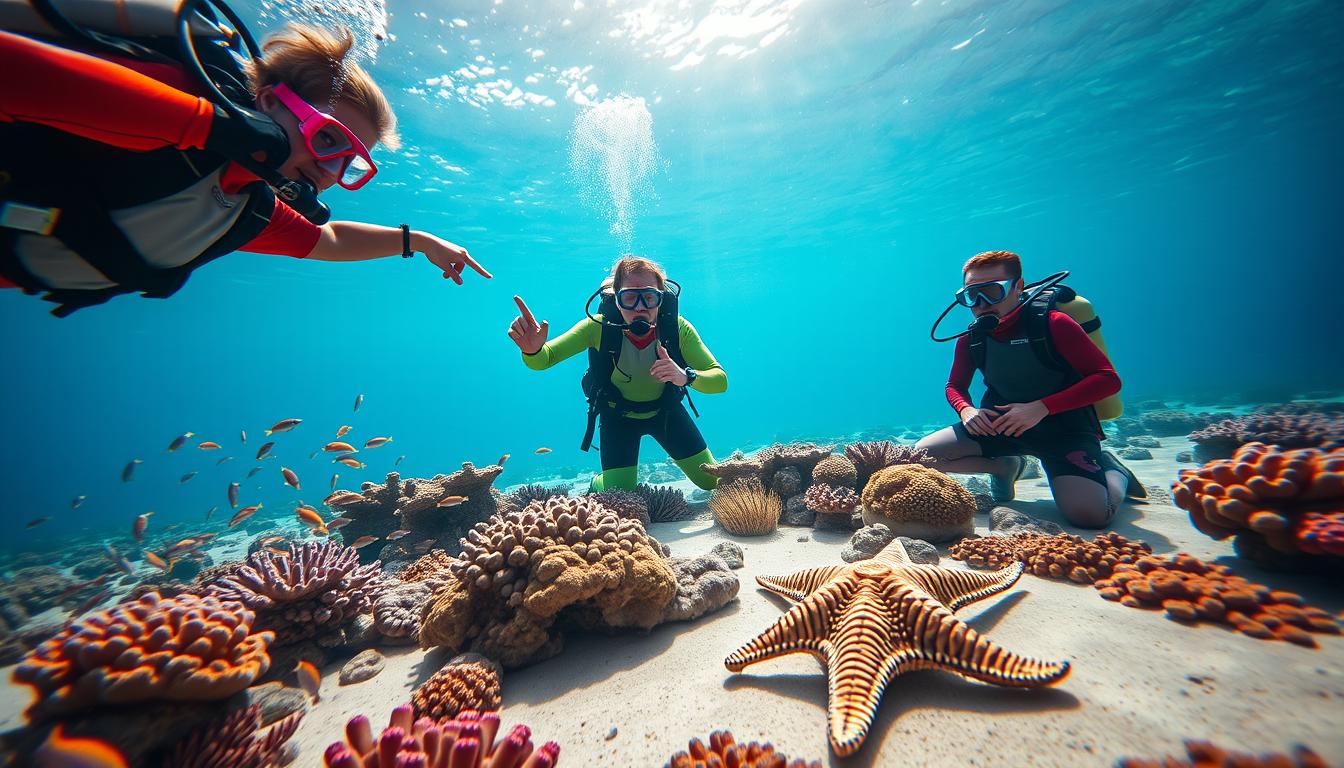
Taking that initial breath beneath the surface is a moment you will never forget. This guide prepares you for the incredible journey into the underwater world. We cover every step, from arrival to your post-dive debrief.
Modern scuba diving programs are designed for maximum safety and enjoyment. Certified instructors provide professional guidance throughout your entire first dive. This structured approach helps you focus on the amazing sensations.
You will explore a new environment with unique buoyancy and marine life encounters. Understanding the process beforehand reduces anxiety. This allows you to fully embrace the adventure.
Key Takeaways
- Your initial underwater exploration is a carefully supervised and safe activity.
- The complete experience, including briefing and gear setup, typically lasts 2-4 hours.
- Depth is limited to around 12 meters (40 feet) for your safety and comfort.
- Professional instructors guide you through equipment fitting and essential skills.
- Pre-dive preparation includes a medical check and completing some theory.
- Breathing underwater feels unusual at first but becomes natural quickly.
- Hand signals are used for clear communication with your instructor and buddy.
Introduction to Your First Dive
Stepping into the ocean with scuba gear opens a portal to an entirely new dimension. This initial underwater adventure connects you with marine life in ways land-based activities cannot match. The transition from surface breathing to submerged exploration creates lasting memories.
Setting the Stage for Underwater Exploration
The marine environment reveals vibrant coral reefs and tropical fish. Sea turtles glide gracefully through clear waters. This underwater world offers three-dimensional movement and weightless freedom.
Encounters with marine ecosystems create transformative moments. These experiences stay with divers forever. The sensation of floating amidst ocean life is uniquely peaceful.
Understanding the Benefits of Scuba Diving
Beyond adventure, scuba diving provides therapeutic value. The rhythmic breathing patterns reduce stress levels. Floating in quiet waters brings meditative calm.
The diving community shares a special bond worldwide. Beginners discover a passion for ocean conservation. This activity builds confidence through gradual skill development.
Professional instruction ensures safe, enjoyable exploration. Realistic expectations help newcomers approach with excitement rather than nervousness.
Preparing for Your First Dive
The journey into scuba diving begins long before you slip beneath the surface. Proper groundwork ensures your underwater adventure is both safe and exhilarating. This preparation phase covers essential medical checks and educational components.
Pre-Dive Briefing and Online Theory
Modern dive courses feature comprehensive online learning modules. Most PADI programs include eLearning that covers pressure physics and safety protocols. Completing this theory beforehand maximizes your practical training time.
You’ll study breathing techniques and equipment fundamentals at your own pace. This foundational knowledge makes hands-on instruction more effective. Arriving prepared allows you to focus on skill development.
Medical Clearance and Paperwork Essentials
Health screening forms the critical first step in dive preparation. These questionnaires identify conditions that might affect underwater safety. Common concerns include asthma, heart issues, and certain medications.
If your form reveals potential issues, obtain physician clearance early. This prevents last-minute cancellations and ensures participant safety. Doctors recommend postponing dives with ear infections or congestion.
Discover Scuba Diving programs offer streamlined options for beginners. These require minimal eLearning followed by pool practice. They’re perfect for testing the waters before full certification.
Arrive 30-45 minutes early for final paperwork and equipment fitting. This extra time reduces pre-dive anxiety and ensures thorough preparation.
Gear and Equipment Setup
Proper equipment setup serves as the foundation for a safe and comfortable underwater experience. Your instructor will guide you through each piece of essential scuba gear.
Equipment Assembly and Fitting
Learning to assemble your diving equipment builds confidence before entering the water. The process begins with connecting the buoyancy control device to the air tank.
Your mask fitting is particularly important for comfort. A well-sealed mask prevents water leakage and reduces anxiety. Many divers prefer purchasing their own mask for perfect fit.
Wetsuits should trap a thin layer of water for insulation. Fins need snug but comfortable fit. Each piece of gear serves a specific purpose in your underwater system.
Proper Use of Buoyancy Control Devices and Regulators
The buoyancy control device functions like an inflatable vest. You’ll learn to control your depth using inflation buttons. This device helps achieve neutral buoyancy.
Your regulator system delivers breathable air from the tank. It includes a primary mouthpiece and backup regulator. Gauges monitor your air supply and depth.
Before every dive, perform systematic safety checks. Test both regulators and verify BCD inflation. This equipment verification ensures a secure underwater adventure.
Mastering Underwater Breathing and Initial Sensations
Breathing underwater for the initial time introduces a unique sensory experience that quickly becomes intuitive. The air from your regulator feels drier than surface air and requires slightly more effort. This unusual sensation typically becomes comfortable within 5-10 minutes of practice.
Your instructor begins this crucial training in shallow water where you can kneel comfortably. This controlled environment allows complete focus on breathing technique without depth concerns. The fundamental rule is simple yet powerful.
Breathing Techniques and Adaptation
Slow, deep breaths create calmness and conserve your air supply. Nervous divers often breathe rapidly, increasing anxiety. Deliberate breathing patterns help establish natural rhythm.
Key adaptation strategies include:
- Focusing exclusively on breathing before other skills
- Accepting the initial unusual sensation as normal
- Practicing in chest-deep water before deeper exploration
Instructor Support and Safety Practices
Your instructor maintains constant proximity during initial underwater breathing practice. They monitor for signs of discomfort like rapid breathing or tense posture. This vigilant supervision ensures immediate assistance if needed.
Professional diving instructors receive specific training in recognizing early distress signals. Their proactive approach prevents minor concerns from escalating. This support system makes your introductory dive both safe and enjoyable.
Remember that mastering underwater breathing unlocks all other diving abilities. This foundational skill quickly becomes second nature, paving the way for confident exploration during your initial dive experience.
Learning Essential Dive Skills
Essential scuba skills form the bridge between surface preparation and open water exploration. These practical abilities ensure safety and confidence during underwater adventures. Mastering fundamental techniques transforms theoretical knowledge into real-world capability.
Mask Clearing and Regulator Recovery
Mask clearing represents one of the most challenging yet vital skills for beginners. The technique involves deliberately allowing water into your mask, then removing it through proper breathing. You’ll tilt your head back, press the mask top against your forehead, and exhale through your nose.
Regulator recovery prepares you for unexpected situations underwater. If your breathing apparatus gets dislodged, you’ll learn to locate it by following the hose. A sweeping arm motion helps find the regulator, followed by clearing any water before resuming normal breathing.
Buoyancy Control and Hand Signal Communication
Achieving neutral buoyancy through precise BCD control allows effortless hovering at any depth. This skill protects marine environments while providing weightless freedom. You’ll practice adding and removing air to maintain perfect balance.
Underwater communication relies entirely on standardized hand signals since speech is impossible. Essential signals include the “OK” circle gesture, thumbs-up for ascent, and flat hand waving to indicate problems. These visual cues ensure clear understanding between diving partners.
| Essential Skill | Primary Purpose | Key Technique | Practice Environment |
|---|---|---|---|
| Mask Clearing | Water removal from mask | Head tilt and nasal exhalation | Shallow confined water |
| Regulator Recovery | Breathing apparatus retrieval | Hose following and sweeping motion | Controlled pool setting |
| Buoyancy Control | Depth maintenance | BCD inflation/deflation | Various water depths |
| Hand Signals | Underwater communication | Standardized gestures | All diving environments |
What to Expect on Your First Dive: Underwater Experience
Descending into the ocean reveals sensory transformations that define the scuba diving experience. Your initial immersion introduces physical changes that quickly become part of the adventure’s magic.
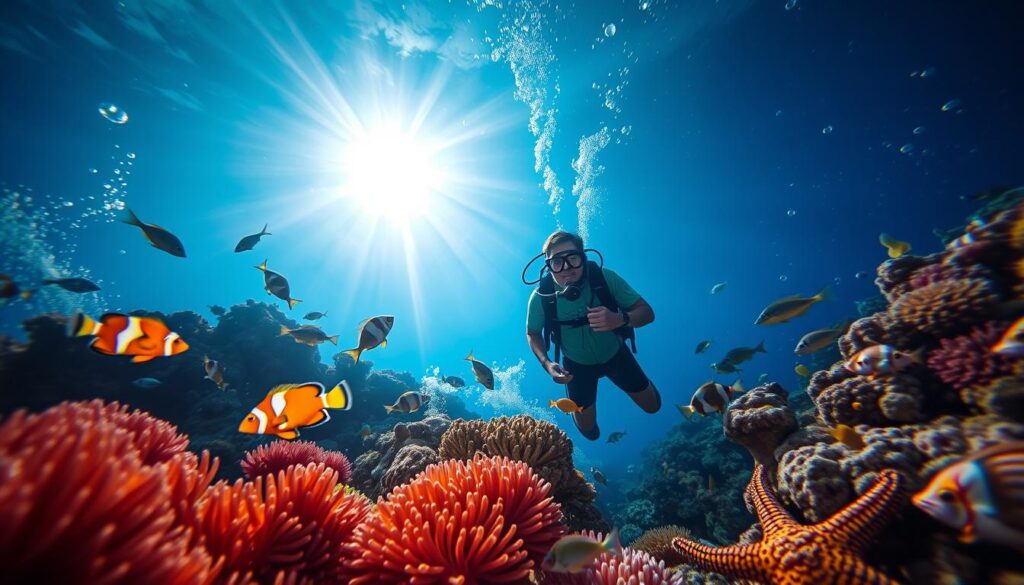
Water pressure creates noticeable sensations in your ears, requiring regular equalization. This pressure change is most dramatic in the first 10 meters where it doubles. The temperature feels cooler despite wetsuit protection.
Exploring Marine Life and Visual Transformations
Colors transform underwater as water filters out red wavelengths first. By 10 meters depth, reds appear brown or black while blues dominate. This creates the distinctive blue-green lighting of the marine environment.
Marine life encounters may include tropical fish like parrotfish and angelfish. You might see coral formations, sea turtles, or harmless nurse sharks. Most species live within the first 15 meters, perfect for beginner exploration.
The Sensation of Weightlessness and Pressure Changes
Proper buoyancy control creates weightlessness similar to floating in space. This three-dimensional freedom provides peaceful movement impossible on land. Water resistance makes actions feel slower but more deliberate.
Sounds travel differently with your breathing creating rhythmic noise. Marine life vocalizations and boat engines sound distinct underwater. These acoustic changes contribute to the unique experience.
| Sensory Aspect | Surface Experience | Underwater Experience | Adaptation Required |
|---|---|---|---|
| Pressure | Normal atmospheric | Doubles every 10 meters | Frequent ear equalization |
| Temperature | Air temperature | Cooler despite protection | Wetsuit acclimation |
| Color Perception | Full spectrum | Reds disappear at depth | Visual adjustment |
| Movement | Normal resistance | Slower, weightless | Buoyancy control |
| Sound | Normal transmission | Enhanced, rhythmic | Audio focus shift |
Respectful observation means maintaining distance from marine animals. Allow curious species to approach naturally rather than chasing them. This protects both the animals and ensures authentic encounters.
Navigating Safety Procedures and Emergency Protocols
Safety procedures transform scuba diving from an adventure into a secure activity. Multiple systems work together to protect divers throughout each underwater journey. Understanding these protocols builds confidence before entering the water.
Your instructor will explain each safety measure during pre-dive briefings. These comprehensive dive safety protocols ensure you’re prepared for various scenarios. Professional instructors maintain constant supervision.
The Buddy System and Air Supply Management
The buddy system requires staying within 2-3 meters of your partner. Each diver monitors the other’s air supply and equipment function. This partnership forms the foundation of diving safety.
Regular air checks every 5-10 minutes prevent supply issues. Your instructor will remind you to monitor your pressure gauge. Proper consumption planning ensures adequate reserves for ascent.
Controlled Ascent and Safety Stop Techniques
Controlled ascent rates of 9-10 meters per minute prevent decompression sickness. Modern scuba computers provide warnings if you ascend too quickly. This careful approach protects your body from nitrogen buildup.
Safety stops at 5 meters depth offer additional protection. Even beginner dives practice this 3-5 minute precaution. The stop allows extra time for nitrogen to leave safely.
| Safety Procedure | Primary Function | Key Measurement | Backup System |
|---|---|---|---|
| Buddy System | Continuous monitoring | 2-3 meter distance | Instructor supervision |
| Air Management | Supply conservation | 5-10 minute checks | Alternate air source |
| Controlled Ascent | Decompression prevention | 9-10 m/minute rate | Dive computer alerts |
| Safety Stop | Nitrogen off-gassing | 3-5 minutes at 5m | Extended surface interval |
Emergency procedures cover multiple scenarios while maintaining safety. Actual emergency situations remain rare in recreational scuba diving. Proper training under certified instructors ensures excellent safety records.
Post-Dive Procedures and Equipment Care
The moments following your return to the surface involve crucial procedures that ensure safety and preserve your equipment. Proper post-dive routines protect both your health and your scuba gear investment.
Safe Gear Removal and Equipment Checks
Keep your regulator in place and mask secured until you’re safely aboard. Remove fins while holding the tag line before ladder ascent.
Maintain distance from the ladder during other divers’ climbs. This prevents accidents if someone falls backward.
After boarding, carefully remove your scuba equipment. Rinse everything thoroughly with fresh water to prevent corrosion.
Hydration, Dive Logging, and Post-Dive Recovery
Drink water immediately after your dive. Dehydration occurs from breathing dry tank air and immersion effects.
Record your dive details in a logbook. Note depth, duration, and marine sightings for future reference.
Wait at least 24 hours before flying after scuba diving. This prevents decompression sickness risks.
Your second dive will feel more comfortable as familiarity grows. Many divers recommend scheduling consecutive dives while skills remain fresh.
Conclusion
The world beneath the surface awaits those ready to take the next step in their diving journey. Your initial underwater adventure often sparks a lasting passion for marine exploration.
If your Discover Scuba Diving experience captivated you, consider PADI Open Water Diver certification. This globally recognized training opens up independent diving adventures worldwide. The program typically takes just 2-3 days.
Schedule consecutive dives to build muscle memory and confidence. Choose beginner-friendly locations with calm conditions. The right dive center makes all the difference for your progression.
Each subsequent dive feels more natural as skills become automatic. This incredible activity offers endless opportunities for discovery throughout your life.