
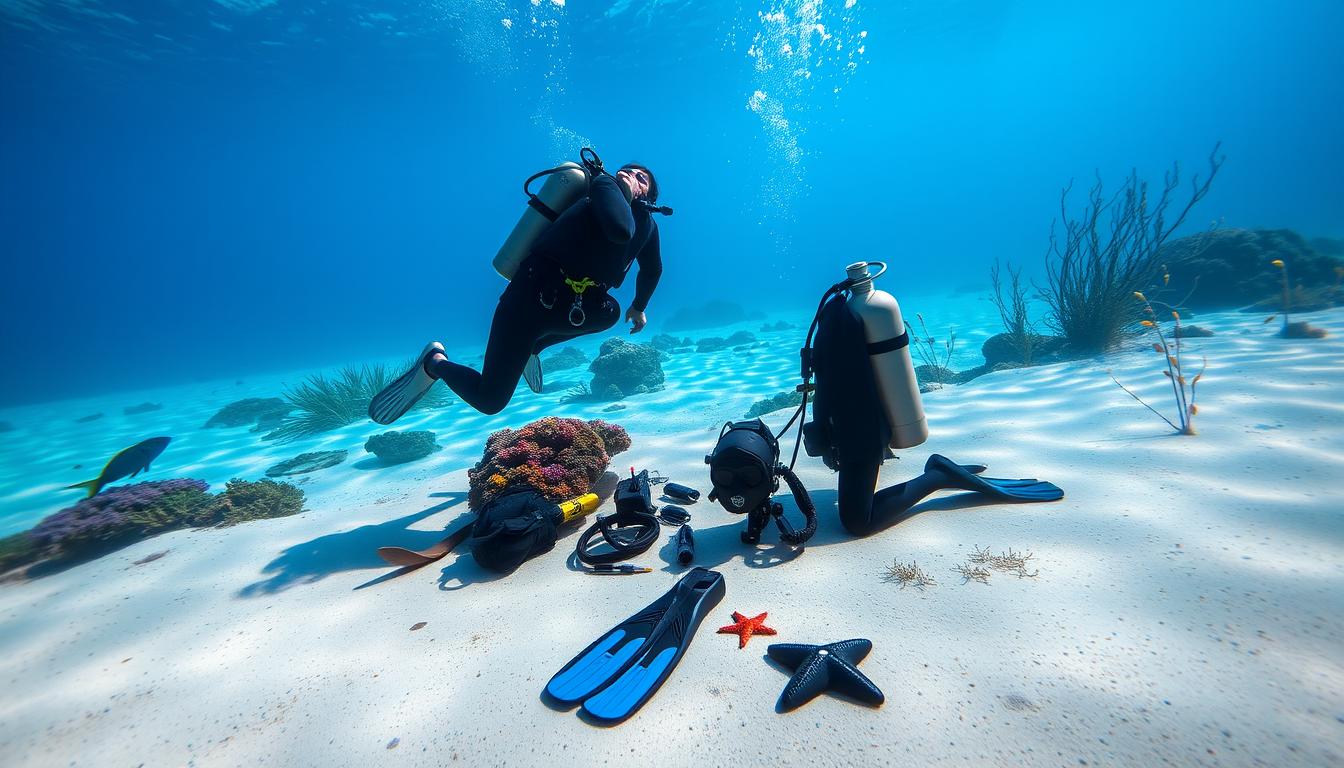
Over two-thirds of our planet is covered by water, a vast world that remains a mystery to most people. This aquatic realm holds incredible sights, from colorful coral reefs to historic shipwrecks. Learning how to explore it safely opens up a new dimension of adventure.
This guide covers the essential skills and knowledge you need to start your journey. We will walk you through the necessary equipment, fundamental techniques, and safety protocols. Proper training is crucial, much like learning to drive a car, ensuring you can enjoy the ocean responsibly.
Our goal is to prepare you for your first underwater adventure. You will learn what to expect and how to become a certified diver. This foundation paves the way for a lifetime of discovering marine life and connecting with a global community of explorers.
Key Takeaways
- Scuba diving provides access to the majority of our planet covered by water.
- Proper training and certification are essential for safety and responsibility.
- This guide covers the necessary equipment and fundamental skills for beginners.
- Mastering these basics allows for safe exploration of marine environments.
- Certification opens the door to a global community of underwater enthusiasts.
- Understanding these principles ensures an enjoyable and transformative experience.
Mastering Scuba Diving Basics
Proper training transforms the underwater world from an intimidating environment into an accessible playground. You’ll develop essential abilities through hands-on practice under professional guidance.
The core competencies include assembling your equipment correctly and managing your air supply effectively. Maintaining proper buoyancy at different depths is another critical skill. Respectful observation of marine life completes this foundation.
This learning process follows a mastery-based approach. Instructors demonstrate each technique individually. Students practice progressively until they achieve confidence in controlled environments.
Over 95% of participants highly recommend their PADI instructors after completing courses. This demonstrates the effectiveness of structured programs that prioritize safety. Certification ensures you can handle various underwater situations with confidence.
Understanding Scuba Gear and Equipment
Quality diving equipment serves as your personal life support system beneath the waves. Each piece plays a crucial role in your safety and comfort. Proper gear selection ensures you can focus on the experience rather than technical concerns.
Choosing the Right Equipment
Your mask provides clear underwater vision and must fit perfectly. A poor seal causes leaks and discomfort during descents. Many enthusiasts prefer purchasing their own mask for ideal fit.
Fins offer efficient propulsion through water currents. Recreational snorkeling fins often lack the stiffness needed for proper diving applications. Investing in quality fins improves your mobility and reduces fatigue.
Most certification programs provide core equipment like wetsuits and buoyancy control devices. However, personal items like masks and fins typically require individual purchase. This ensures proper hygiene and customized fit for each diver.
Modern Innovations: Regulators and Tanks
Modern tanks utilize lightweight aluminum construction instead of heavy steel. Standard international models hold 12 liters of compressed air. Divers with higher consumption rates often choose 15-liter tanks for extended underwater time.
Regulators represent critical life-support equipment that reduces high-pressure air to breathable levels. Leading brands like Aqua Lung and Scuba Pro design regulators for smooth airflow at any depth. These innovations ensure consistent breathing regardless of remaining tank pressure.
The BCD allows precise buoyancy control through an inflatable air bladder. This essential piece of gear enables effortless hovering and controlled descents. Modern BCD designs incorporate comfortable harness systems and intuitive controls.
| Equipment Type | Primary Function | Key Features | Considerations |
|---|---|---|---|
| Mask | Clear underwater vision | Tempered glass, silicone skirt | Fit testing, anti-fog coating |
| Fins | Efficient propulsion | Channel design, adjustable straps | Blade stiffness, foot pocket comfort |
| BCD | Buoyancy control | Air bladder, inflation system | Lift capacity, integrated weights |
| Regulator | Breathing apparatus | Pressure reduction, octopus backup | Breathing resistance, environmental sealing |
| Tank | Air supply storage | Aluminum construction, valve system | Capacity, pressure rating, visual inspection |
Selecting the Right Certification Course
Your journey into underwater exploration begins with choosing the proper certification program. This essential step qualifies you to rent gear, obtain air fills, and book adventures worldwide. The entry-level Open Water Diver certification serves as your passport to this exciting realm.
Reputable training organizations follow structured approaches to ensure student success. They combine academic learning with hands-on practice in controlled environments. Qualified instructors guide you through each phase of the certification process.
PADI Open Water Diver Course Overview
The PADI Open Water Diver course stands as the world’s most recognized certification program. This comprehensive training follows a three-part structure: knowledge development, confined water practice, and open water dives. Most students complete their certification in four to seven days.
PADI issues over one million certifications annually through its global network. The flexibility of their program allows up to one year for completion. This accommodates various learning paces and busy schedules effectively.
SSI and Other Certification Options
SSI (Scuba Schools International) offers an equally respected alternative certification pathway. Their Open Water Diver program teaches identical fundamental skills and safety protocols. Both organizations provide internationally recognized credentials.
Choosing between PADI and SSI often depends on local instructor availability and dive shop affiliations. Course costs vary by location and package inclusions but represent a valuable investment in your adventure training. Working with a qualified instructor ensures proper technique development throughout your certification journey.
Preparing for Your First Dive
Before you take the plunge, understanding the physical requirements ensures a safe and enjoyable experience. You don’t need to be an Olympic swimmer, but comfort in the water is essential.
Certification courses include simple swimming assessments. These tests verify your ability to handle yourself in aquatic environments.
Swimming and Health Requirements
The water competency evaluation has two parts. First, you must float or tread water for ten minutes without assistance. You can use any technique that keeps you afloat comfortably.
Second, you’ll swim continuously for 200 meters. There’s no time limit, and any stroke is acceptable. If you use a mask, fins, and snorkel, the distance increases to 300 meters.
“Being honest about your health represents one of the most important aspects of preparation. Proper self-assessment protects your safety during underwater exploration.”
Reasonable physical fitness matters for this activity. Your body needs to carry equipment and handle mild currents. You don’t need athletic conditioning, but basic health is important.
| Assessment Type | Required Performance | Time Limit | Equipment Options |
|---|---|---|---|
| Water Treading | 10 minutes continuous | None | No flotation aids |
| Distance Swim | 200 meters/yards | None | Swimwear only |
| Distance Swim (with gear) | 300 meters/yards | None | Mask, fins, snorkel |
People with various physical conditions can participate successfully. Adaptive techniques accommodate individual needs while maintaining safety standards.
Medical screening may be required for certain health conditions. This ensures your body can handle the unique pressures of being underwater. Consulting a doctor beforehand prevents complications.
Step-by-Step Guide to the PADI Open Water Diver Course
The PADI Open Water Diver course follows a clear three-part structure that builds confidence systematically. This approach ensures students master each phase before advancing to the next level. The progression moves from academic learning to practical application in real environments.
Students begin with knowledge development through flexible eLearning options. They study equipment terminology, safety protocols, and essential techniques at their own pace. Most dive centers now prefer this digital approach for its comprehensive coverage.
Knowledge Development and E-Learning
Modern certification programs offer interactive online platforms with instructional videos. Students can complete this phase using computers or mobile devices. Some locations still provide traditional classroom sessions for those who prefer in-person learning.
The academic foundation covers everything from dive theory to emergency procedures. This preparation ensures students understand the principles before entering the water. Thorough knowledge development creates safer, more competent divers.
Confined Water and Open Water Training
Confined water sessions take place in pools or similar controlled environments. Here, students take their first breaths underwater under instructor guidance. Each skill is demonstrated individually before students practice progressively.
Instructors use a mastery-based approach that builds comfort gradually. Students practice equipment assembly multiple times until it becomes automatic. This develops the muscle memory needed for proper setup before every dive.
Open water training occurs in natural environments like oceans or lakes. Students complete four dives total, typically over two days. The final dive involves creating and executing their own dive plan under supervision.
This structured progression ensures readiness for independent diving adventures. Each phase builds upon the previous one, creating confident, capable divers.
Learning Through Digital and In-Person Training
Today’s training methods accommodate diverse learning preferences through innovative platforms and traditional instruction. Modern education offers flexible pathways that fit various schedules and learning styles.
Most certification programs now embrace digital platforms for knowledge development. Students can complete theoretical components at home using computers or mobile devices. This approach saves valuable time while maintaining educational quality.
Benefits of PADI eLearning
PADI’s digital platform allows students to study at their own pace. The system provides interactive content and instructional videos. Many centers offer free trial courses to evaluate the learning experience.
This flexible way of learning suits busy individuals perfectly. Students can complete coursework during convenient times. The online approach prepares them thoroughly for practical sessions.
| Training Method | Learning Style | Time Flexibility | Best For |
|---|---|---|---|
| Fully Digital | Self-paced study | Complete flexibility | Busy professionals |
| Traditional Classroom | Structured learning | Scheduled sessions | Hands-on learners |
| Combination Approach | Blended methods | Partial flexibility | Balanced preferences |
| Overseas Immersion | Intensive practice | Vacation schedule | Travel enthusiasts |
Local dive centers continue offering in-person instruction for those preferring immediate instructor access. Many students appreciate meeting future dive buddies during classroom sessions. The variety of options ensures everyone finds their ideal learning path.
Building Buoyancy and Underwater Skills
Achieving perfect buoyancy represents a transformative milestone for every underwater explorer. This essential ability allows you to move through water with grace and efficiency.
Proper buoyancy control conserves your air supply and protects delicate marine environments. It transforms your experience from a struggle to a seamless adventure.
Mastering Buoyancy Control Techniques
Understanding the three buoyancy states is fundamental to mastery. Neutral buoyancy lets you hover effortlessly at any depth. Positive buoyancy keeps you comfortable at the surface. Negative buoyancy enables controlled descents.
Your BCD serves as the primary tool for managing buoyancy. Small air adjustments create precise control throughout your dive. Breathing techniques provide fine-tuning without equipment changes.
Proper weighting before entering the water establishes your foundation. Horizontal body position improves movement efficiency. These techniques develop through consistent practice during training.
| Buoyancy State | Primary Function | Equipment Adjustment | Practical Application |
|---|---|---|---|
| Positive | Surface floating | BCD fully inflated | Resting, equipment adjustment |
| Neutral | Depth maintenance | Minimal BCD air | Observation, photography |
| Negative | Controlled descent | BCD air released | Dive initiation, depth changes |
Mastering these skills ensures comfortable, extended underwater experiences. Effective buoyancy control separates novice enthusiasts from skilled practitioners.
Exploring Different Underwater Environments
Each dive location presents a unique set of conditions that challenge and reward enthusiasts differently. The world’s aquatic environments vary dramatically from tropical reefs to cold-water kelp forests.
Popular dive sites around the globe offer distinct experiences. Tropical destinations feature warm water and vibrant marine life. Cold-water environments demand specialized gear but provide exceptional visibility.
Understanding environmental factors is crucial for safe exploration. Water temperature, visibility, and currents change with seasons and tides. These dynamic conditions require careful assessment before each dive.
Beginners should start with calm, shallow environments to build experience. As skills develop, enthusiasts can progress to more challenging dive sites. Deeper depths and stronger currents offer advanced adventures.
Proper preparation ensures enjoyable experiences across diverse underwater worlds. Assessing conditions matches your experience level with each environment’s demands. This approach leads to rewarding exploration at any dive location.
Safety Protocols and Dive Planning
Before entering the water, meticulous planning and systematic checks ensure a secure and enjoyable experience. These practices form the foundation of responsible underwater exploration.
Comprehensive protocols minimize risks while maximizing adventure. They include equipment inspections, air management, and emergency preparedness.
Pre-Dive Safety Checks
The buddy system begins with thorough equipment verification. Partners inspect each other’s gear before every descent.
This ritual confirms proper BCD inflation, regulator function, and weight system release. All gauges and dive computers must function accurately.
Effective Dive Planning
Establishing depth limits and time parameters is crucial. Modern technology helps calculate safe profiles.
Discuss entry procedures, communication signals, and emergency protocols with your partner. Safe diving practices ensure you surface with adequate air reserves.
Monitoring pressure throughout the experience prevents dangerous situations. Always maintain visual contact with your buddy.
Tips to Overcome Initial Fears and Enhance Confidence
Feeling nervous before your first underwater experience is a natural reaction that millions of people share. Concerns about breathing through equipment, encountering marine life, or being in open water are common. Proper training systematically addresses these apprehensions.
This activity ranks among the safest adventure sports when protocols are followed. Statistical records show certified participants experience remarkably low incident rates. Remaining calm and trusting your instructor creates smooth adventures.
Managing Health and Fitness
Understanding your body’s capabilities builds essential confidence. Address medical conditions with physician approval before beginning. Reasonable physical conditioning ensures you’re prepared for training challenges.
Breathing underwater initially feels unnatural to our bodies. Modern regulators deliver air effortlessly with each breath. Most people adapt quickly in shallow water, finding rhythmic breathing relaxing.
For hesitant individuals, Discover Scuba Diving offers low-pressure opportunities. Try equipment and take first breaths under professional supervision. This helps determine interest before committing time to full certification.
Embracing Underwater Adventure
Building confidence happens gradually throughout the training process. Start with simple skills in confined water. Progress to complex techniques as comfort increases.
Millions of ordinary people from all backgrounds become confident divers. The extraordinary beauty of underwater environments makes overcoming hesitation worthwhile. Acknowledging fears while pushing beyond comfort zones leads to transformative experiences.
| Fear Type | Management Technique | Training Focus | Result |
|---|---|---|---|
| Breathing Anxiety | Shallow Water Practice | Regulator Familiarization | Natural Rhythm Development |
| Marine Life Concerns | Environmental Education | Respectful Observation | Comfortable Coexistence |
| Open Water Apprehension | Gradual Exposure | Buddy System Mastery | Confident Exploration |
| Equipment Worries | Repeated Practice | System Checks | Automatic Proficiency |
Each person progresses at their own pace toward aquatic confidence. The training way ensures safety while expanding personal boundaries. This approach creates lifelong enthusiasts.
Advancing Your Skills with Specialty Courses
After earning your Open Water Diver certification, a world of specialized underwater adventures awaits. These advanced programs transform casual enthusiasts into skilled practitioners.
The Advanced Open Water Diver course represents the natural progression. This program introduces deeper exploration and specialized techniques. Participants experience different environments under guided supervision.
Advanced Open Water Diver and Rescue Diver
Advanced Open Water training builds fundamental skills while introducing specialty areas. Each adventure dive counts toward full specialty certifications. This expands your capabilities and confidence significantly.
Rescue Diver courses follow Advanced Open Water certification. They teach essential emergency management skills. This training creates safer, more valuable dive buddies.
Exploring Specialty Dives: Wreck, Night, and More
Wreck diving courses teach safe exploration of sunken vessels. Proper navigation and historical context enhance these underwater museums. Participants learn respectful interaction techniques.
Night diving certifications introduce thrilling after-dark experiences. Nocturnal marine life and bioluminescence create magical environments. Specialized navigation skills become crucial after sunset.
Underwater photography specialties capture stunning marine images. They cover composition techniques and equipment handling. Buoyancy control ensures stable shooting positions.
Exploring Dive Sites and Underwater Photography
The true adventure begins when you venture beyond training sites to discover the planet’s most spectacular aquatic environments. Certification unlocks access to thousands of incredible locations worldwide. From vibrant coral reefs to mysterious shipwrecks, each site offers unique experiences.
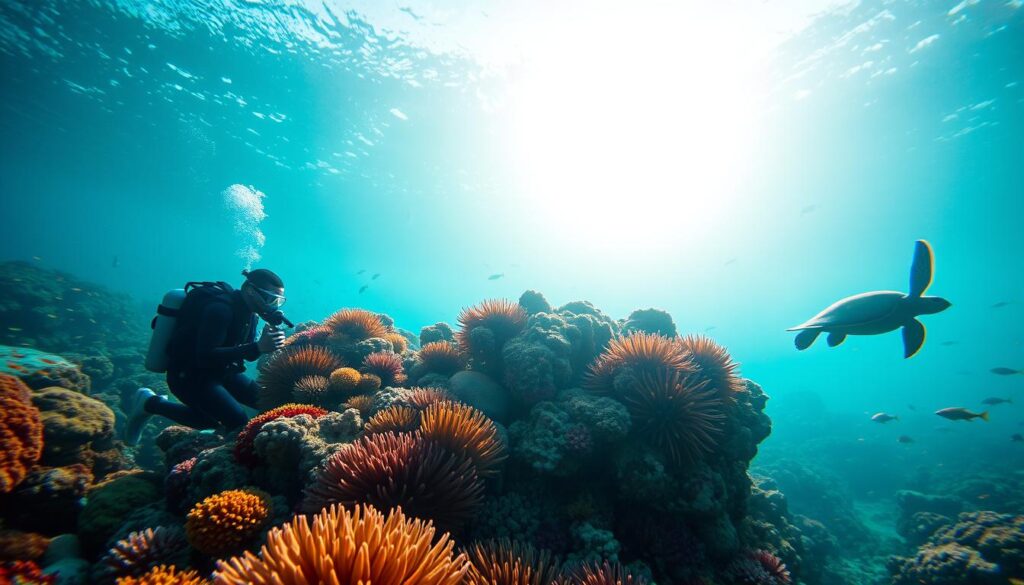
Guided dive trips provide safe access to remarkable destinations. Local Divemasters share valuable knowledge about optimal diving times and marine life sightings. This way, you can explore new places while meeting fellow enthusiasts.
Capturing Underwater Moments
Underwater photography lets you preserve the beauty of marine environments. Modern cameras make it easy to document colorful reef fish and dramatic seascapes. These images become cherished memories of your diving experiences.
Liveaboard adventures offer immersive multi-day trips to remote sites. Vessels travel to pristine locations with minimal diver traffic. Popular destinations include the Bahamas, Australia’s Great Barrier Reef, and Egypt’s Red Sea.
Thailand ranks among the most accessible destinations for new divers. Affordable costs and excellent visibility make it ideal for building experience. The Maldives and Caribbean also offer world-class diving in stunning settings.
Conclusion
Your certification journey culminates in a lifetime pass to explore Earth’s aquatic realms. The Open Water credential remains valid forever, giving you permanent access to underwater adventures worldwide.
After completing your course, you’ll receive a digital certification card. This eCard serves as your passport to rent equipment and book guided dives anywhere. If you take time off, refresher programs like PADI ReActivate help you review skills.
This foundation prepares you for confident exploration with trained buddies. Choosing recognized agencies supports ocean conservation and sustainable practices. Your education continues with each new dive destination and specialty course.
Start your adventure today by contacting a local dive center. Within days, you’ll explore underwater worlds. Over a lifetime, you’ll accumulate memorable experiences while protecting our ocean planet.