
That familiar evening question, “What’s for dinner?”, can spark real anxiety. After a long day, the last thing you want is to stare into a fridge full of random ingredients. This daily dilemma often leads to expensive, less-healthy takeout because it feels easier.
Mastering a few simple strategies can transform this kitchen chaos into a smooth routine. A solid foundation for your weekly food preparation saves precious time and mental energy. You gain control, replacing daily guesswork with a clear roadmap.
This approach is a practical life skill for anyone, not just those on strict diets. It’s a powerful form of self-care that helps you manage your budget and resources better. You make intentional choices that lead to more enjoyable evenings at home.
This guide will walk you through the fundamental steps. We focus on realistic strategies that fit into a busy schedule. You will learn how to create a system that works for you and your family.
Key Takeaways
- The daily “what’s for dinner” decision is a major source of stress for many households.
- Establishing a routine for your weekly food prep can save significant time and mental energy.
- Having a plan reduces last-minute grocery trips and food waste.
- This is a practical skill for everyone, helping to manage your budget and make better food choices.
- It is a form of self-care that creates more calm and enjoyable mealtimes.
- Effective strategies can be tailored to fit even the most demanding schedules.
Understanding Meal Planning Basics
Structured food preparation transforms chaotic evenings into organized, stress-free experiences. This systematic approach gives you a clear roadmap for your weekly eating routine.
What is Meal Planning and Why It’s Essential
Creating a weekly food strategy means mapping out your dinners ahead of time. You decide what to eat for the coming days before grocery shopping.
This method helps you make healthier choices. Restaurant options often contain more calories, fat, and sodium than homemade dishes.
You gain better control over ingredients and portion sizes. This supports your health goals while saving money.
The Role of Structured Planning in Reducing Kitchen Stress
A well-organized framework eliminates daily decision pressure. You know exactly what’s coming up each evening.
This approach removes last-minute scrambling for ideas. It creates calm, predictable mealtimes at home.
Even beginners can start with simple plans covering just a few days. The system becomes easier with practice over time.
Benefits of a Well-Thought-Out Meal Plan
The true power of a structured weekly menu lies in its ability to create positive ripple effects throughout your life. This simple habit transforms your relationship with food and your schedule.
You gain control over your kitchen and your time. The system offers concrete advantages for your budget and health.
Saving Time and Money in Your Daily Routine
A clear strategy for the week eliminates countless small decisions. You no longer waste mental energy each day wondering what to make.
This efficiency saves you hours. You make one focused grocery trip instead of several unplanned visits.
Your wallet benefits greatly. You buy only what you need, avoiding impulse purchases and expensive last-minute takeout. This is one of the key benefits of a structured approach.
Improving Nutrition and Reducing Food Waste
When you decide your dishes ahead of time, you make more conscious choices. You control ingredients and portions, supporting a balanced diet.
Food waste drops dramatically. Every item you buy has a purpose, so less spoils unused.
| Aspect | With a Plan | Without a Plan |
|---|---|---|
| Time Spent | Focused, efficient | Fragmented, stressful |
| Grocery Budget | Controlled, strategic | Unpredictable, higher |
| Food Waste | Minimal | Significant |
| Nutritional Quality | Intentional, balanced | Often convenience-based |
How to Create Your Weekly Meal Plan
The journey to organized eating begins with creating a practical framework for your week ahead. This systematic approach turns chaotic evenings into smooth, predictable experiences.
Step-by-Step Guide to Planning Meals Like a Pro
Start by setting aside thirty minutes before your grocery trip. Use this time to map out your eating schedule without distractions. Write down each day of the week and note any busy evenings.
Identify which nights need quick solutions like crockpot dishes or leftovers. You don’t need to cook seven different meals each week. Aim for three to five prepared dishes and plan for leftovers.
Review your favorite recipes or explore new ones. Create a shopping list with necessary ingredients and everyday staples. Always check your pantry first to avoid buying duplicates.
Incorporating Leftovers and Easy Weeknight Dinners
Strategic leftover use makes your system more efficient. Plan to repurpose Monday’s baked chicken into Thursday’s pasta dish. Transform extra soup into a quick midweek lunch.
Get creative with ingredients that didn’t get fully used. Add remaining chicken to fried rice or use extra yogurt as a breakfast topping. This approach prevents waste and adds variety to your routine.
Incorporating Meal Prep and Grocery Strategies
Mastering your kitchen workflow involves two key components: organized preparation and intelligent shopping. These strategies work together to create an efficient system.
Effective Techniques for Prepping Meals Ahead
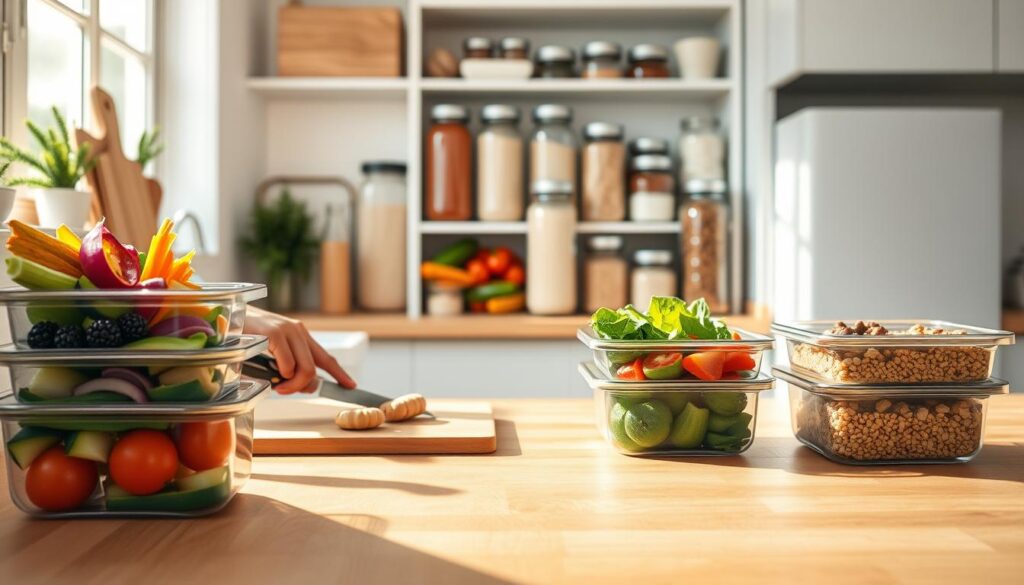
Designate a specific day for your weekly food preparation. Start with items that take longest to cook like proteins and whole grains.
Multi-task by chopping vegetables while other foods cook. This approach maximizes your time in the kitchen.
Managing Your Grocery List and Supermarket Savings
Always check your pantry and freezer before creating your shopping list. This prevents buying duplicate items.
Watch for sales on shelf-stable ingredients like pasta and canned goods. Stock up when prices are low to save money.
Creative Ways to Repurpose Leftovers
Transform yesterday’s roasted chicken into today’s pasta dish. Use leftover vegetables in soups or stir-fries.
This approach reduces waste and adds variety to your routine. It makes your prep work more efficient.
| Food Item | Refrigerator Time | Freezer Time |
|---|---|---|
| Cooked Chicken | 3-4 days | 2-3 months |
| Hard Boiled Eggs | 1 week | Not recommended |
| Ground Meat | 1-2 days | 3-6 months |
| Cooked Meals | 3-4 days | 2-3 months |
| Blanched Vegetables | 3-5 days | 8-12 months |
Utilizing Apps and Tools for Meal Planning Basics
Technology offers powerful solutions to simplify your kitchen organization. Digital tools help both beginners and experienced cooks create efficient systems.
Overview of Helpful Meal Planning Apps and Websites
MeaLime provides flexible options for different eating preferences. Users select their style and build weekly plans from a large recipe collection.
The app automatically creates shopping lists, saving valuable time. This feature eliminates the manual step of writing down ingredients.
Skinny Taste offers hundreds of pre-made plans updated weekly. Each plan includes printable sheets and direct recipe links.
The Real Food Dietitians creates balanced plans developed by professionals. Their seasonal options help you save money using fresh, available ingredients.
Customizable Templates and Digital Grocery Lists
Digital templates like Google Sheets sync across devices. Your list stays accessible whether you’re at home or the store.
These tools let you create personalized systems for recording favorite ideas. You can build a collection of go-to recipes and websites.
For comprehensive solutions, explore the best meal planning apps available today. They provide variety while maintaining organization throughout your week.
These digital resources make the process accessible for busy people. They remove the stress of starting from scratch each time.
Conclusion
Building sustainable kitchen habits requires flexibility and a willingness to adapt your approach over time. Your weekly strategy will naturally evolve as schedules change and life happens. This adaptability is part of successful long-term organization, not a sign of failure.
Involve your household in the process by asking for dinner ideas and favorite foods. If creating a full week of meals feels overwhelming, start with just planning breakfasts or committing to a few home-cooked dinners. Draw inspiration from restaurant favorites you enjoy.
The most important step is simply beginning. Choose one strategy from this guide to implement today. Whether it’s checking your pantry before shopping or trying one new recipe, small actions build lasting positive changes in how you approach food and cooking.