
Scuba diving opens up a breathtaking world beneath the waves. It is far more than just underwater sightseeing. This activity demands a comprehensive set of technical abilities and a strong focus on safety.
Professional practitioners distinguish themselves through meticulous habits. These include thorough equipment checks and honest communication. Building true competence is a continuous process that begins with initial training.
Advancement happens both during actual dives and through land-based exercises. The global community values continuous learning, bringing people together to share knowledge. This supportive environment helps individuals build the confidence needed for various diving environments.
Key Takeaways
- Scuba diving requires a sophisticated combination of technical abilities and safety awareness.
- Skill development is an ongoing process that continues throughout a diver’s career.
- Proficiency is built through consistent practice, both in the water and on land.
- Methodical preparation and maintaining calm under pressure are hallmarks of experienced divers.
- The diving community is evolving to be more welcoming and supportive of continuous learning.
- Honesty about one’s abilities and limitations is a sign of professionalism, not weakness.
- Repetition and experience are crucial for developing the automatic responses needed in challenging situations.
Mastering Core Diving Techniques
The journey to underwater mastery begins with perfecting fundamental abilities that ensure comfort and security beneath the surface. These core competencies form the essential toolkit every practitioner needs.
Mask Clearing and Equalization
Water entering the mask can startle beginners. Proper clearing technique requires calm breathing while tilting the head back. Press the top of the mask frame and exhale through the nose.
Equalizing ear pressure should happen early and often during descent. Waiting for discomfort means waiting too long. Gentle methods prevent ear injuries.
Neutral Buoyancy and Safety Stops
Excellent buoyancy control distinguishes skilled practitioners. It conserves air and protects marine environments. Precise hovering avoids disturbing delicate ecosystems.
Safety stops at 15 feet for 3-5 minutes allow nitrogen to release safely. This practice reduces decompression sickness risk. Never skip this crucial step.
| Technique | Key Benefit | Practice Tip |
|---|---|---|
| Mask Clearing | Maintains vision during equipment issues | Practice in shallow water first |
| Equalization | Prevents ear barotrauma | Equalize every few feet during descent |
| Buoyancy Control | Conserves air and energy | Make small adjustments with breathing |
How Divers Improve Skills: Essential Practices for Safe Diving
Meticulous preparation distinguishes professional underwater practitioners from casual enthusiasts. Systematic routines prevent potential hazards before they occur. These essential practices form the foundation of secure marine exploration.
Pre-Dive Checks and Equipment Maintenance
Every underwater excursion begins with comprehensive safety checks. The BWRAF system ensures nothing is missed. This includes verifying buoyancy control devices, weight systems, and air supply functionality.
Professional scuba divers inspect their gear meticulously before each dive. They test regulator function and ensure all equipment is streamlined. Proper maintenance extends gear lifespan significantly.
After each dive, thorough freshwater rinsing removes corrosive salt deposits. Complete drying prevents mold growth. Proper storage protects equipment from sun damage and moisture.
Effective Use of Hand Signals
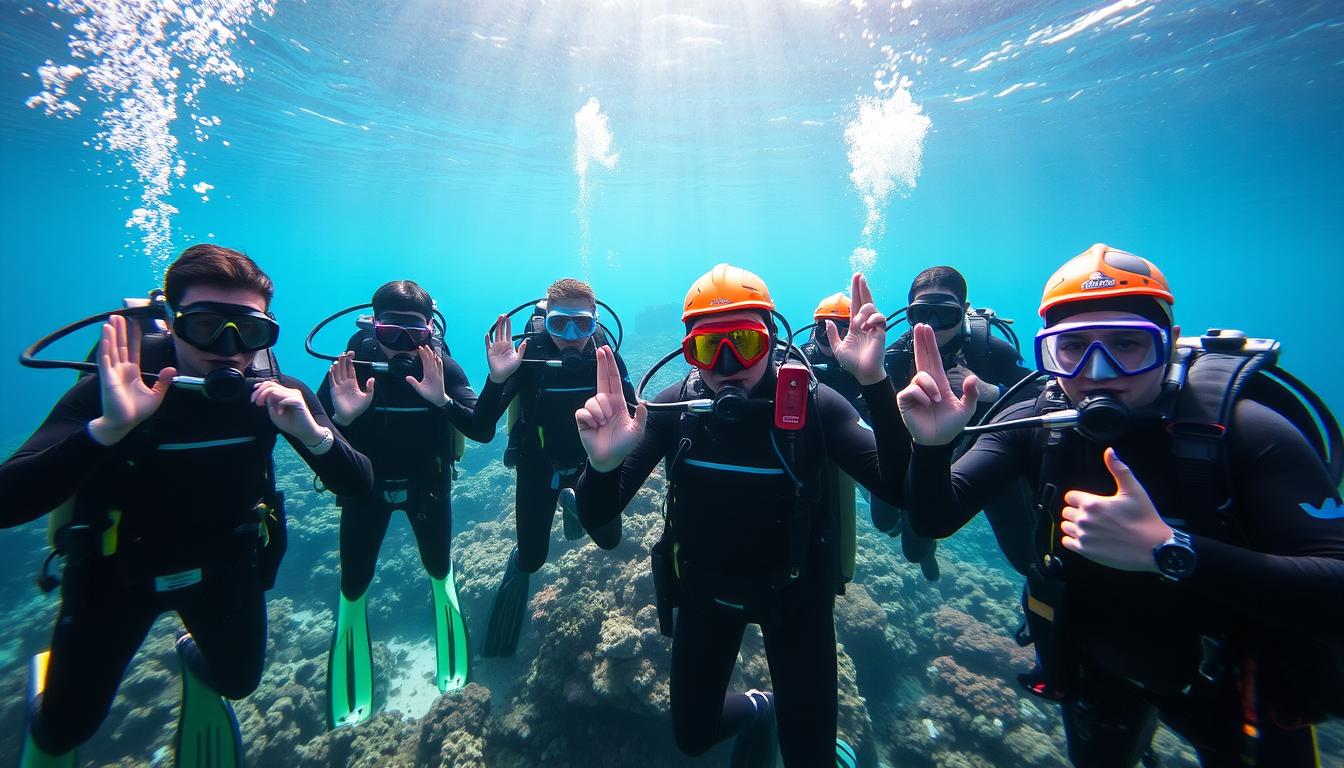
Underwater communication relies entirely on hand signals. These visual cues convey critical information between buddy teams. Clear signals prevent misunderstandings during diving activities.
Essential signals include air pressure inquiries and emergency indications. Practicing until responses become automatic ensures quick communication. This safety system enhances the entire scuba experience.
Confident signal use allows divers to share marine life sightings and navigation intentions. Holding signals clearly ensures buddy recognition. This communication method is vital for scuba diving security.
Building Advanced Competencies for Dive Confidence
Advanced diving proficiency separates casual participants from true underwater experts. This progression involves mastering specialized techniques that enhance safety and enjoyment during scuba adventures.
Underwater Navigation and Photography
Navigation training begins on land before entering the water. Practicing with a compass in open spaces builds essential directional skills. This preparation develops the confidence needed for accurate underwater navigation.
Underwater photography requires substantial practice with camera equipment on land first. Mastering composition and lighting topside makes aquatic photography more successful. Getting physically close to subjects is crucial since water magnifies objects.
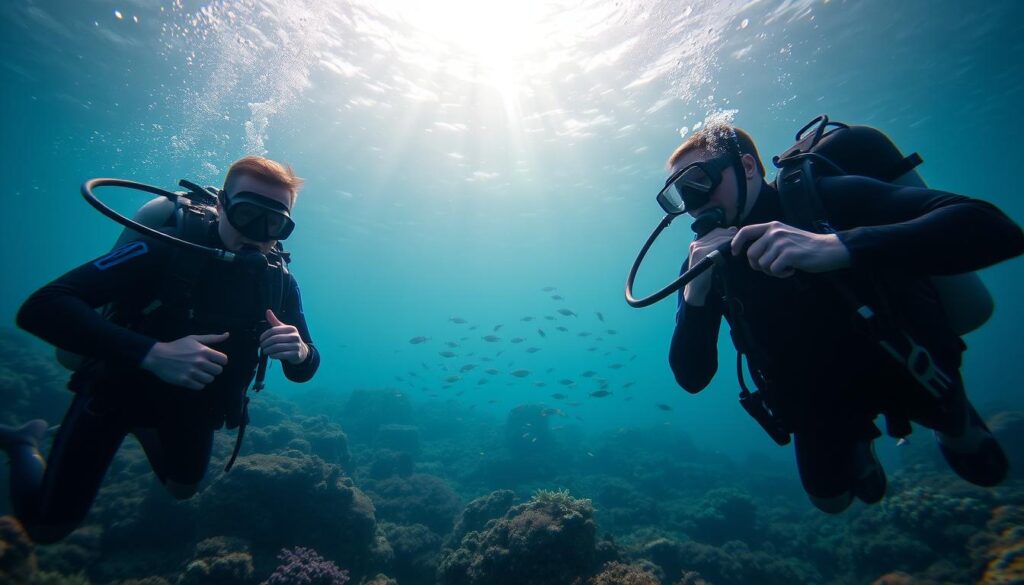
The frog-kick technique provides superior control and power during dives. This efficient finning method enables precise movement without disturbing marine environments. It represents an important skill for advanced practitioners.
Land-Based Training and Exercise Routines
Physical conditioning directly impacts diving performance and safety. Regular aerobic exercise builds endurance for longer dives. Strength training facilitates equipment handling while reducing injury risk.
Yoga practice offers significant benefits through breath control techniques. Conscious breathing promotes relaxation and reduces air consumption. This training helps manage stress during challenging underwater situations.
Equipment Upkeep and Personal Preparedness
Proper equipment maintenance extends beyond basic post-dive rinsing. Regular professional servicing identifies potential issues before they become problems. Systematic inspection before each dive trip ensures gear reliability.
Personal preparedness involves both mental and physical readiness. Understanding personal limits and reviewing emergency procedures creates safer diving experiences. This comprehensive approach supports confident exploration of various aquatic environments.
Conclusion
The true measure of diving excellence extends beyond individual capability. It encompasses technical proficiency, safety awareness, and strong buddy relationships. This comprehensive approach creates confident explorers who respect the underwater world.
Effective communication with your buddy ensures both people feel secure throughout each adventure. Knowing when to voice concerns or adjust the plan prevents potential problems. This mutual trust is the foundation of safe scuba diving experiences.
The community continues to evolve, welcoming new enthusiasts with positive energy. Experienced instructors and seasoned practitioners model the essential skills every scuba diver should know. Their guidance helps newcomers develop proper techniques and safety habits.
Every journey beneath the surface offers opportunities for growth. Continuous learning and honest self-assessment build lasting confidence. This commitment to excellence ensures enjoyable exploration for years to come.