
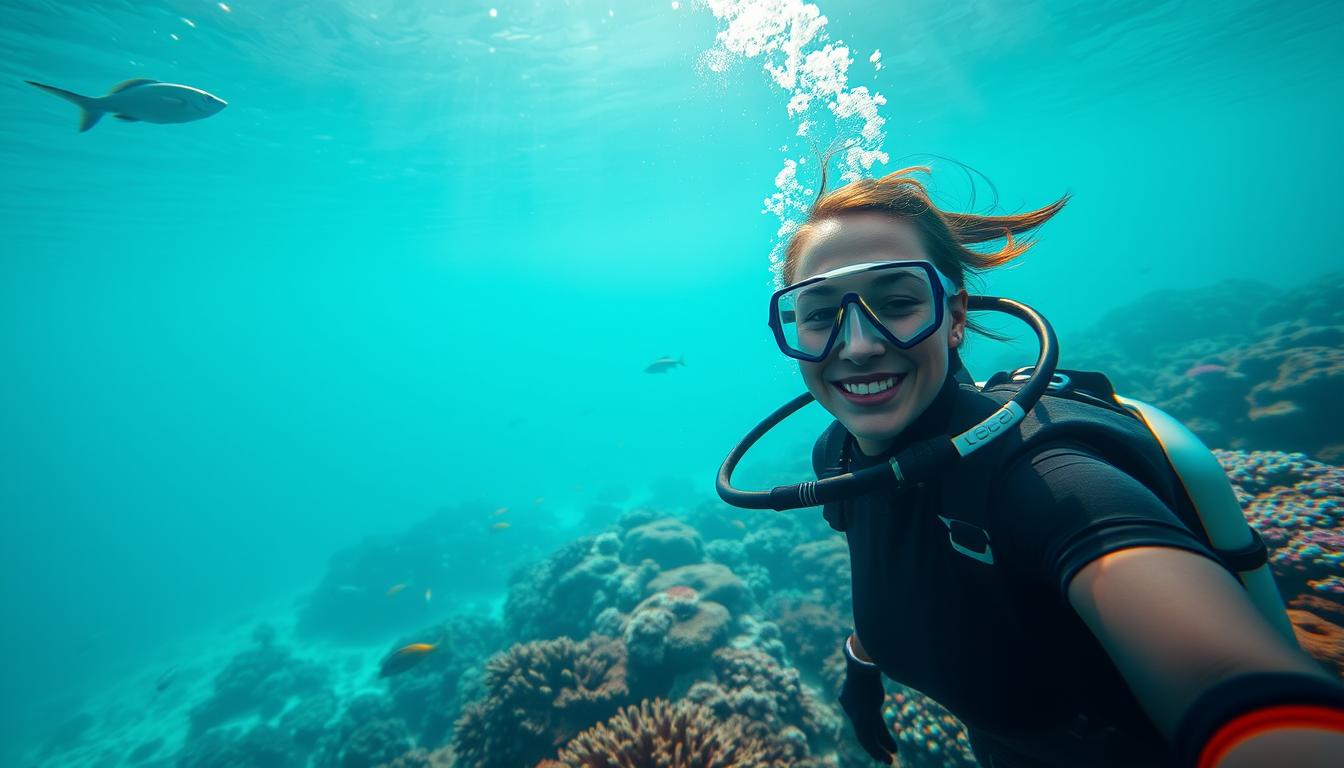
Earning your scuba certification is a huge achievement. But for many, the real challenge begins after the course ends. Feeling uneasy underwater is more common than you might think. This guide is here to help you move past those jitters.
Whether you’re new to the sport or have some experience, anxiety can stem from various sources. It could be managing your gear, controlling your buoyancy, or simply the vastness of the ocean. The good news is that these feelings are manageable with the right approach.
We’ll explore practical strategies used by divers worldwide. These methods address the root causes of discomfort. The goal is to transform your relationship with the underwater world. You can learn to feel calm and in control on every adventure.
Building true comfort is a journey. It involves improving skills, understanding equipment, and mental preparation. Learning technical diving principles, like thorough pre-dive checks, can instill a powerful sense of readiness. This foundation allows you to fully embrace the remarkable experiences waiting beneath the surface.
Key Takeaways
- Post-certification anxiety is a common experience for many divers.
- Common concerns include equipment management and buoyancy control.
- Practical strategies can help you manage unease and build essential skills.
- Improving your comfort level is a process that involves both skill development and mental preparation.
- Adopting structured approaches, like pre-dive checklists, can significantly increase your sense of control.
- The ultimate goal is to enjoy every moment of your underwater exploration.
Understanding Diving Confidence Challenges
Many certified divers discover that their initial excitement is quickly replaced by unexpected apprehension when facing real underwater conditions. This transition from structured training to independent exploration reveals concerns that weren’t apparent during certification.
Common Fears and Anxieties Underwater
New divers often grapple with specific concerns that impact their comfort. Uncertainty from limited experience creates feelings of being out of control in an unfamiliar environment.
Many people develop fears related to marine life encounters. These range from rational concerns about jellyfish to irrational worries about larger creatures. The equipment itself can also trigger anxiety through its unfamiliar feel and function.
Worst-case scenario thinking frequently plagues anxious divers. Minds spiral through unlikely equipment failures or emergency situations. Buddy disconnect adds another layer when partners have different skill levels.
Overcoming Discomfort and Uncertainty
The key to moving past these challenges lies in recognizing their normalcy. Understanding that these fears are shared by many divers reduces their power.
What feels like dislike for scuba diving is often simply unfamiliarity. With proper support and gradual experience, these feelings transform into comfort. Mental preparation and openly acknowledging concerns allow for systematic progress.
Each successful dive builds positive experience that counters initial apprehension. The underwater world becomes less intimidating as skills develop. This progression naturally leads to greater enjoyment of marine environments.
Essential Diving Skills and Equipment Checks
Systematic preparation rituals used by experienced underwater professionals can transform gear anxiety into complete equipment mastery. Technical divers demonstrate how thorough checks build reliability.
Performing Comprehensive Pre-Dive Buddy Checks
The BWRAF method provides a structured approach. Begin With Review And Friend covers BCD operation, weights, releases, air, and final procedures.
Knowing your partner’s gear prevents confusion underwater. Water density affects color perception at depth. Familiarity with their fins, wetsuit, and mask creates safety.
Communication before the dive ensures both parties understand hand signals. Early problem recognition prevents issues from escalating.
Mastering Equipment Setup and Use
Assembling your own scuba gear builds fundamental understanding. Rather than relying on dive centers, learn how every component connects.
Check your air supply thoroughly before descending. Ensure the tank valve opens fully. Verify regulator breathing and alternate air source function.
Understanding buoyancy control devices reduces constant adjustments. Proper weighting and small corrections conserve energy. Regular practice makes essential skills second nature.
Techniques to Build Underwater Confidence
Building lasting comfort underwater starts with fundamental practices that create a solid foundation. These methods help transform nervous energy into focused control.
Practicing Buoyancy and Breathing Techniques
Mastering buoyancy control is essential for feeling at ease. The Peak Performance Buoyancy course provides structured learning in safe environments. This training begins in pool settings before progressing to open water.
Proper breathing techniques conserve air and maintain calm. Slow, deep inhalations followed by complete exhalations regulate heart rate. Continuous breathing prevents lung injuries while promoting relaxation.
Hovering exercises develop precise control without hand or foot movement. This practice builds muscle memory for effortless navigation. Small adjustments replace constant inflation and deflation.
Incorporating Meditation and Yoga for Calm
Meditation centers the mind before entering the water. This practice reduces anxiety and improves breath control. A calm mental state translates directly to better underwater experiences.
Yoga complements scuba by building core strength and flexibility. Pranayama breathing techniques enhance respiratory control. Regular practice develops the physical foundation needed for assured exploration.
| Technique | Primary Benefit | Practice Frequency | Skill Level |
|---|---|---|---|
| Buoyancy Control | Energy conservation | Every dive | All levels |
| Breathing Exercises | Air consumption reduction | Daily practice | Beginner-friendly |
| Meditation | Anxiety management | Pre-dive routine | All levels |
| Yoga Integration | Body awareness | 2-3 times weekly | Intermediate+ |
Taking a moment during each dive to hover and observe your breath creates meditation-like presence. This approach protects marine environments while building genuine assurance.
Diving Confidence Tips for Every Dive
The transition from certified diver to confident explorer requires deliberate practice. One diver learned this the hard way after waiting six months post-certification. She later called this decision “not smart.” Consistent experience is crucial for building comfort.
Addressing Equipment and Dive Buddy Concerns
Finding the right dive buddy makes a significant difference. Some partners may not understand your learning pace. One diver recalled her boyfriend saying, “I’m not saying you’re ruining our vacation but…” This pressure can hinder progress.
Joining local clubs or group trips provides supportive communities. These environments allow you to meet divers at various skill levels. Open communication before each dive prevents misunderstandings.
Air management is another critical area. Confident explorers always surface with reserves. The rule of thirds ensures safety: one-third out, one-third back, one-third emergency.
Gaining Experience Through Progressive Training
Start with easy sites featuring good visibility and calm conditions. Shallow depths allow focus on skill development rather than challenging environments. Each successful outing builds positive reinforcement.
Gradually increase difficulty as comfort grows. Move from calm waters to mild currents when ready. This progressive approach prevents overwhelming experiences.
| Dive Phase | Primary Focus | Recommended Frequency | Air Reserve Goal |
|---|---|---|---|
| Initial Dives | Comfort building | Weekly | 50 bar minimum |
| Skill Development | Technique refinement | Bi-weekly | 70 bar preferred |
| Advanced Exploration | Challenge progression | Monthly+ | Rule of thirds |
Regular practice transforms conscious skills into automatic responses. This repetition reduces pre-dive anxiety over time. The more you dive, the more natural it feels.
Strategies to Reduce Pre-Dive Anxiety
Feeling nervous before a dive is completely normal, even for experienced divers. These feelings can be managed with specific preparation techniques. A structured approach helps transform anxiety into excitement.
Mental Preparation and Effective Dive Briefings
Start preparing a week before your scuba adventure. Connect with other divers who know the area. Review your training materials to refresh essential skills.
Twenty-four hours beforehand, watch inspiring ocean documentaries. Avoid alcohol and get proper rest. This prevents negative thought patterns from developing.
On dive day, arrive early to avoid rushing. Participate fully in the dive briefing. Ask about depth limits, dive time, and potential marine life encounters.
Relaxation Methods for Dive Day Success
Practice breathing exercises before entering the water. Slow, deep breaths calm your mind and body. This technique helps you feel centered the moment you submerge.
Communicate any concerns with your divemaster. PADI professionals can offer reassurance and support. Never feel pressured to dive if you’re not ready.
| Timeframe | Key Actions | Mental Benefit |
|---|---|---|
| One Week Before | Skill review, diver connections | Builds familiarity |
| 24 Hours Before | Inspirational media, proper rest | Creates positive mindset |
| Dive Day | Early arrival, thorough briefing | Reduces time pressure |
These strategies help you surface feeling accomplished after each scuba experience. Proper preparation makes every dive more enjoyable.
Training and Continuing Education for Divers
Continuing your education after certification opens new dimensions of underwater exploration. Structured learning builds essential abilities beyond basic certification requirements. This progression transforms nervous beginners into capable marine adventurers.
Exploring Advanced and Specialty Courses
The Advanced Open Water course introduces varied environments under instructor guidance. This training exposes participants to different conditions while building essential abilities. Many find this structured approach reduces apprehension effectively.
Specialty programs like Peak Performance Buoyancy address specific concerns. Mastering buoyancy control creates a solid foundation for all underwater activities. Technical diving principles offer systematic approaches that many find reassuring.
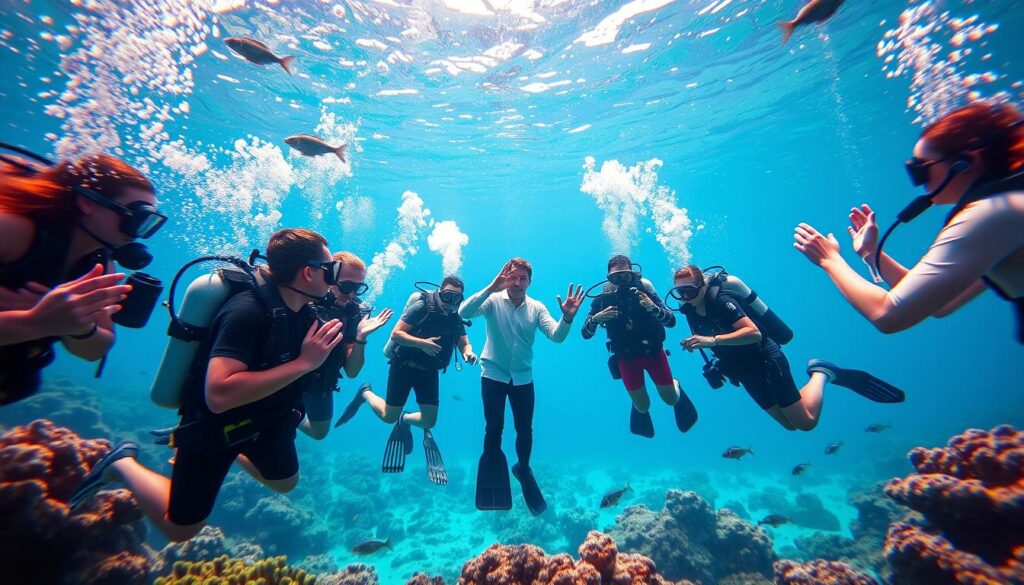
Practical Tips for Building Long-Term Skills
Choose instructors whose teaching style matches your learning needs. Patient, empathetic professionals can dramatically improve your experiences. The right mentor makes complex skills feel accessible and manageable.
Consider the Rescue Diver course when ready for advanced training. This program replaces worry with practical preparedness techniques. Participants learn to prevent problems and handle emergency situations confidently.
| Course Type | Primary Benefits | Ideal Timing | Skill Focus |
|---|---|---|---|
| Advanced Open Water | Environment exposure | 3-6 months post-certification | Adaptation skills |
| Peak Performance Buoyancy | Energy conservation | First specialty course | Control precision |
| Rescue Diver | Emergency preparedness | After 20+ dives | Problem-solving |
| Technical Diving | Systematic approach | Advanced level | Equipment mastery |
Regular educational investments pay dividends in safety and enjoyment. Each course builds upon previous experiences to create comprehensive capability. This continuous learning journey transforms apprehension into excited anticipation.
Conclusion
The path from initial apprehension to genuine underwater comfort is traveled by countless divers each year. Many who once considered quitting after certification now explore the ocean with genuine assurance.
If you feel the call of the sea, persevere through early challenges. Your future self will appreciate the commitment. Each dive builds positive experience that replaces uncertainty.
Focus on mastering your equipment and monitoring your air supply. These practical steps create tangible progress. The underwater world offers unique moments that reward every effort.
Remember that every confident explorer started as a beginner. With proper training and supportive buddies, you can transform your relationship with the water. The remarkable privilege of breathing beneath the surface awaits your discovery.