
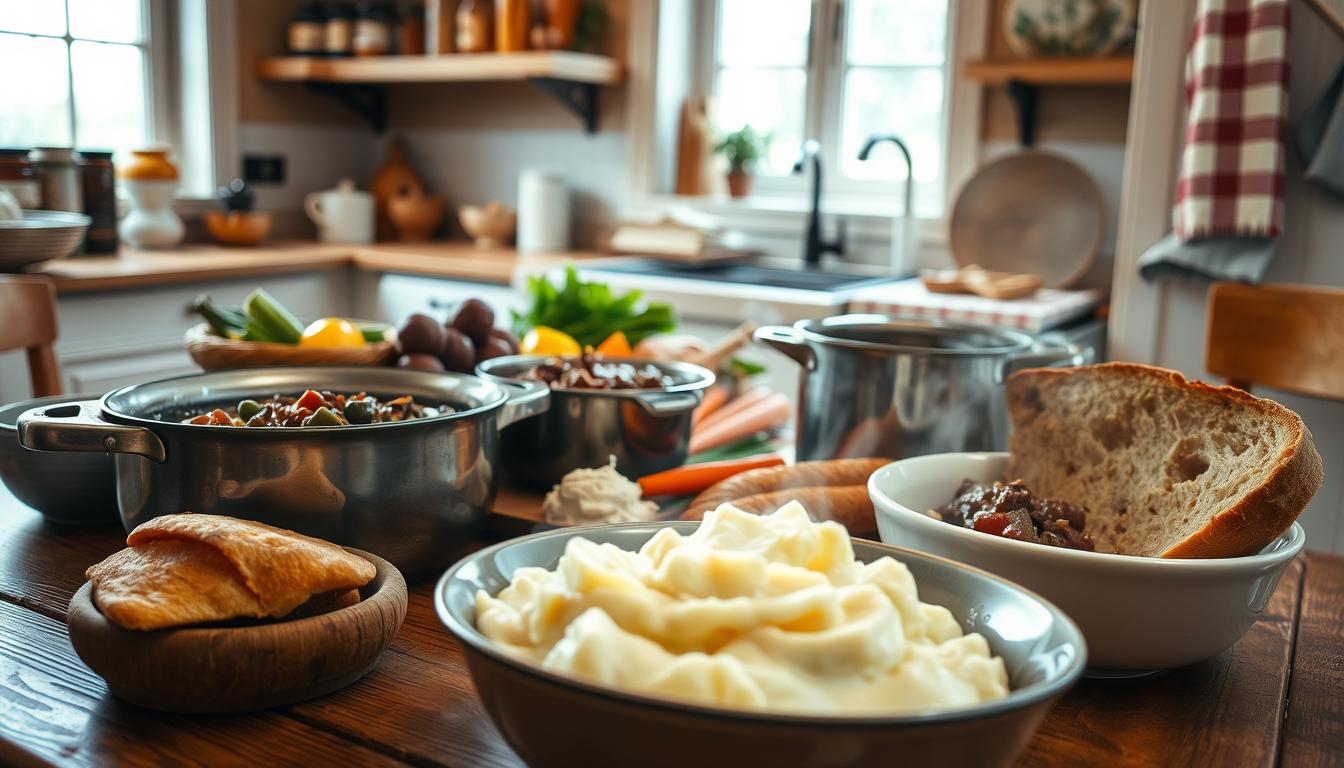
Certain dishes hold a special place in our hearts and memories. They transport us back to specific moments and connect us across generations. These beloved meals represent more than just nourishment—they carry stories and emotions.
The power of these culinary favorites lies in their ability to evoke strong feelings. A single taste can trigger vivid recollections of family gatherings and cherished occasions. These recipes become woven into our personal histories.
Across different cultures, people share similar attachments to specific preparations. While the ingredients may vary, the emotional significance remains universal. These culinary touchstones provide a sense of belonging and continuity.
This exploration will trace the development of these meaningful dishes through history. We’ll examine how they evolved from simple sustenance to cultural symbols. The journey will reveal why certain preparations endure through time.
Key Takeaways
- Certain dishes carry deep emotional significance beyond their nutritional value
- Familiar tastes and aromas can trigger powerful memories and connections
- These culinary favorites serve as bridges between generations and cultures
- The emotional power of these meals transcends specific ingredients or recipes
- Historical context helps explain why certain dishes become culturally significant
- These meaningful preparations often represent shared human experiences
- Understanding their origins reveals insights about cultural identity and continuity
Exploring comfort food traditions
Historical context reveals how everyday meals transformed into emotionally significant traditions. These dishes often began as practical solutions to feeding families with limited resources.
Mental health clinician Cheryl K. Webster explains the deep roots of these connections.
“When it comes to food, specifically what we may deem culturally as ‘comfort foods,’ a lot of the meaning behind it stems from a generational background.”
Analyzing Historical Recipes and Their Origins
Early recipes served as cultural documentation, preserving more than just cooking techniques. They carried stories, values, and entire ways of life that might otherwise disappear.
Different cultures developed distinct culinary identities through necessity and creativity. Soul food scholar Adrian Miller notes this represents “the most soulful expression of humanity” born from historical circumstances.
Recipes Passed Down Through Generations
Family kitchens became living museums where knowledge traveled from grandmother to mother to children. This transmission created powerful bonds across generations.
Migration patterns spread these culinary treasures across regions. People carried their food heritage as they moved, maintaining cultural continuity through shared meals.
These recipes became vehicles for preserving collective memory. They represent a tangible connection to ancestors and their way of life.
Classic American Comfort Food Recipes
From coast to coast, certain preparations have become staples in American households, representing more than just nourishment. These iconic dishes connect families through shared experiences around the dinner table.
Each recipe carries the weight of generations, with flavors that evoke memories and create new ones. The ingredients tell stories of resourcefulness and love.
Hearty Dinners: Chicken Soup, Pot Pie, and More
Classic Jewish Chicken Soup simmers for hours, developing a clean, savory taste. The simple combination of chicken, carrots, and celery creates a deeply soothing dish.
Easy Beef Pot Pie combines tender meat with vegetables in a rich gravy. This baked meal delivers familiar flavors in about sixty minutes.
Traditional Irish Cottage Pie layers ground meat with mashed potatoes. The savory result represents hearty home cooking at its finest.
Familiar Sides: Corn Casserole and Mashed Potatoes
Homemade Corn Casserole bakes to a lightly sweet, creamy perfection. Eggs and dairy create a familiar taste that complements any main course.
Mashed potatoes with gravy offer a creamy, savory experience. This staple side dish appears in many Western meals.
Mac and cheese stands as the quintessential pasta preparation. The cheesy sauce makes this dish a beloved American classic.
| Dish | Preparation Time | Key Ingredients | Flavor Profile |
|---|---|---|---|
| Classic Jewish Chicken Soup | 2 hours | Chicken, carrots, celery, herbs | Clean, savory, soothing |
| Easy Beef Pot Pie | 60 minutes | Beef, vegetables, gravy, pastry | Rich, savory, familiar |
| Traditional Irish Cottage Pie | 75 minutes | Ground meat, vegetables, potatoes | Savory, hearty, layered |
| Homemade Corn Casserole | 45 minutes | Corn, eggs, butter, dairy | Lightly sweet, creamy |
Global Influences on Home-Cooked Meals
International kitchens offer fascinating insights into how different societies develop their own versions of soul-satisfying preparations. These global foods reveal universal patterns in creating meaningful meals.
Thai Street Food and Its Unique Omelette Culture
Kai Jiew Moo Saap represents Thailand’s vibrant street foods culture. This beloved dish combines eggs with minced pork for a light, fluffy texture.
The preparation differs significantly from Western omelettes. Yet it serves similar emotional purposes for those who grew up with these foods.
From Greek Avgolemono to International Variations
Soup traditions span cultures with remarkable consistency. Greek-American chef Christina Xenos describes one classic preparation.
“Avgolemono Soup is Greek penicillin—a chicken soup made with either orzo pasta or rice that you fold an egg-lemon sauce into.”
Vietnamese soup culture also creates powerful connections. First-generation American Alexander Nguyen shares his perspective.
“There are many versions of soup eaten throughout the country. My grandma makes them all the time during family gatherings.”
| Dish | Culture | Key Ingredients | Preparation Style |
|---|---|---|---|
| Kai Jiew Moo Saap | Thai | Eggs, minced pork, spices | Street food quick-fry |
| Avgolemono Soup | Greek | Chicken, rice, egg-lemon sauce | Simmered home cooking |
| Phở | Vietnamese | Broth, noodles, herbs, spices | Long-simmered broth |
| Bún Bò Huế | Vietnamese | Beef, lemongrass, chili | Spicy central cuisine |
Each culture develops distinct flavor profiles using similar ingredients. The way these meals connect people to home remains consistent across borders.
Modern Adaptations and Innovative Flavors
Contemporary culinary landscapes are witnessing a remarkable evolution in beloved dishes. Chefs and home cooks alike are reimagining classic preparations while preserving their emotional essence.
This movement represents an exciting chapter in culinary history. Traditional flavors meet innovative cooking techniques to create memorable experiences.
Fusion Dishes and Reinvented Classics
Creative chefs blend cultural influences to produce novel taste profiles. Truffle mac and cheese elevates a familiar favorite with luxury ingredients.
Fusion dishes honor multiple culinary traditions simultaneously. They create bridges between different food cultures while maintaining comforting qualities.
Health-Conscious and Plant-Based Comfort Options
Modern dietary preferences inspire innovative adaptations. Cauliflower mac and cheese offers a lighter alternative with familiar creamy textures.
Vegan chicken pot pie demonstrates how plant-based ingredients can recreate classic meals. These adaptations prove that emotional connections transcend specific components.
| Traditional Dish | Modern Adaptation | Key Innovation | Flavor Profile |
|---|---|---|---|
| Classic Mac and Cheese | Truffle Mac and Cheese | Luxury ingredients | Earthy, creamy |
| Beef Pot Pie | Vegan Chicken Pot Pie | Plant-based proteins | Savory, familiar |
| Mashed Potatoes | Cauliflower Mash | Vegetable base | Light, creamy |
| Chicken Soup | Asian Fusion Soup | Cultural blending | Complex, soothing |
These contemporary interpretations expand culinary possibilities. They maintain the heart of traditional meals while embracing modern tastes.
Cultural Stories Behind Iconic Comfort Dishes
Every family carries culinary stories that transform simple ingredients into emotional touchstones. These narratives give ordinary dishes extraordinary meaning across generations.
Family Traditions and Emotional Ties
Gulf Coast cuisine reveals how specific foods become woven into identity. Soul food and Cajun dishes formed the base of celebrations for many people.
Sunday dinners featured alternating menus of fried fish, pork chops, or chicken. These meals always included baked macaroni, cornbread, and collard greens.
This culinary heritage traveled with people leaving the South after emancipation. They carried recipes north and west, maintaining cultural continuity through home cooking.
Recognition often comes before the name with vintage comfort foods. You know them by their aroma, presentation, or how the first bite feels.
Grandmother’s carrot casserole exemplifies this phenomenon. The baked side dish with soft texture and gentle sweetness became a staple without formal introduction.
These preparations become part of everyday life through repetition and emotional connection. They preserve more than recipes—they carry family histories and cultural values.
Iconic comfort foods serve as living documentation of family experiences. Each preparation tells a story that transcends its ingredients.
The Role of Comfort Foods in Building Community
Shared meals create invisible threads that weave individuals into tight-knit groups. These gatherings transform simple ingredients into social glue.
Home kitchens become hubs where relationships strengthen over familiar dishes. The experience creates lasting bonds between participants.
Nostalgia, Shared Memories, and Mood Improvement
Psychological factors drive our attraction to certain dishes. Emotional fulfillment provides security during stressful periods.
Nostalgia connects us to childhood through specific flavors. Scientific evidence shows carbohydrates and fats trigger serotonin release.
Mental health expert Cheryl K. Webster explains the benefits.
“When comfort foods are not abused, it can assist with bringing people long-term eustress, which releases endorphins that can help to regulate your mood.”
This chemical response explains why certain meals improve emotional states. The connection goes beyond simple taste preferences.
Comfort-Filled Moments and Communal Gatherings
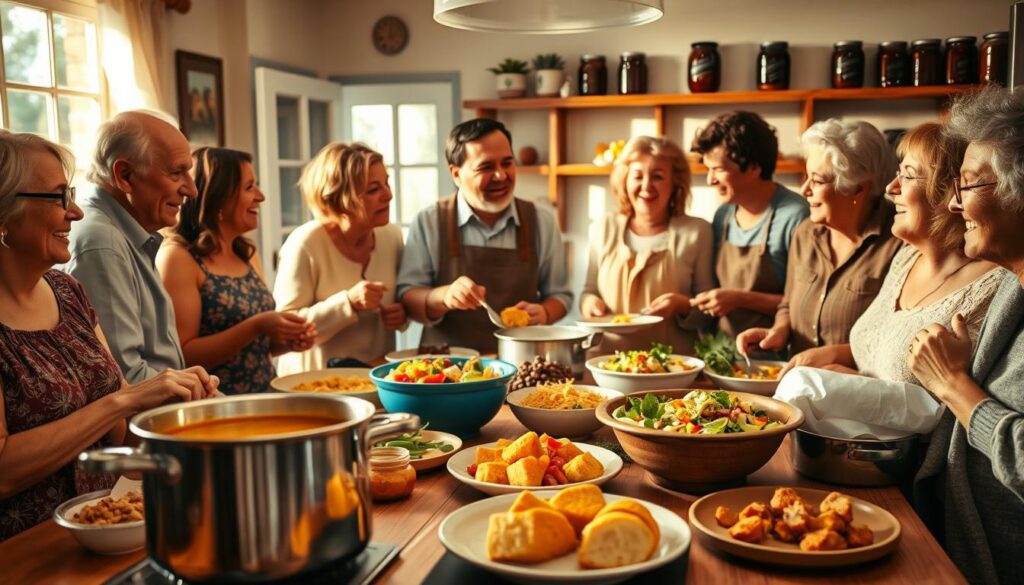
Sunday dinners and potlucks demonstrate food’s unifying power. These events answer important questions about cultural identity.
Specific dishes become central to group warmth. Whether featuring meat, rice, or special spices, they create shared meaning.
Migration patterns highlight this phenomenon strongly. People use familiar sauces and preparations to maintain homeland connections.
The time invested in communal cooking reinforces relationships. This shared experience provides mental comfort across generations.
| Psychological Driver | Food Example | Community Impact | Emotional Benefit |
|---|---|---|---|
| Nostalgia | Grandmother’s Recipes | Intergenerational Bonding | Security and Belonging |
| Mood Regulation | Carbohydrate-Rich Dishes | Stress Reduction Gatherings | Serotonin Release |
| Cultural Identity | Traditional Spice Blends | Immigrant Community Support | Roots Connection |
| Shared Experience | Potluck Specialties | Neighborhood Building | Collective Warmth |
Conclusion
While ingredients and techniques vary globally, the emotional resonance of cherished dishes remains constant. From the Gulf Coast to Greece, different food cultures create distinct flavor profiles. Yet the underlying experience of love and security transcends all boundaries.
These meaningful meals serve as a base for understanding cultural identity and family bonds developed over time. Each person’s preferred preparation reflects their background and personal history. The warmth these creations provide is universally understood.
Comfort food represents more than culinary technique. It embodies feelings of familiarity that connect us across generations. Appreciating both our own and others’ cherished preparations reveals our shared humanity.
The journey through these culinary touchstones shows how simple ingredients become emotional anchors. They preserve stories and create connections that endure beyond any single meal.