
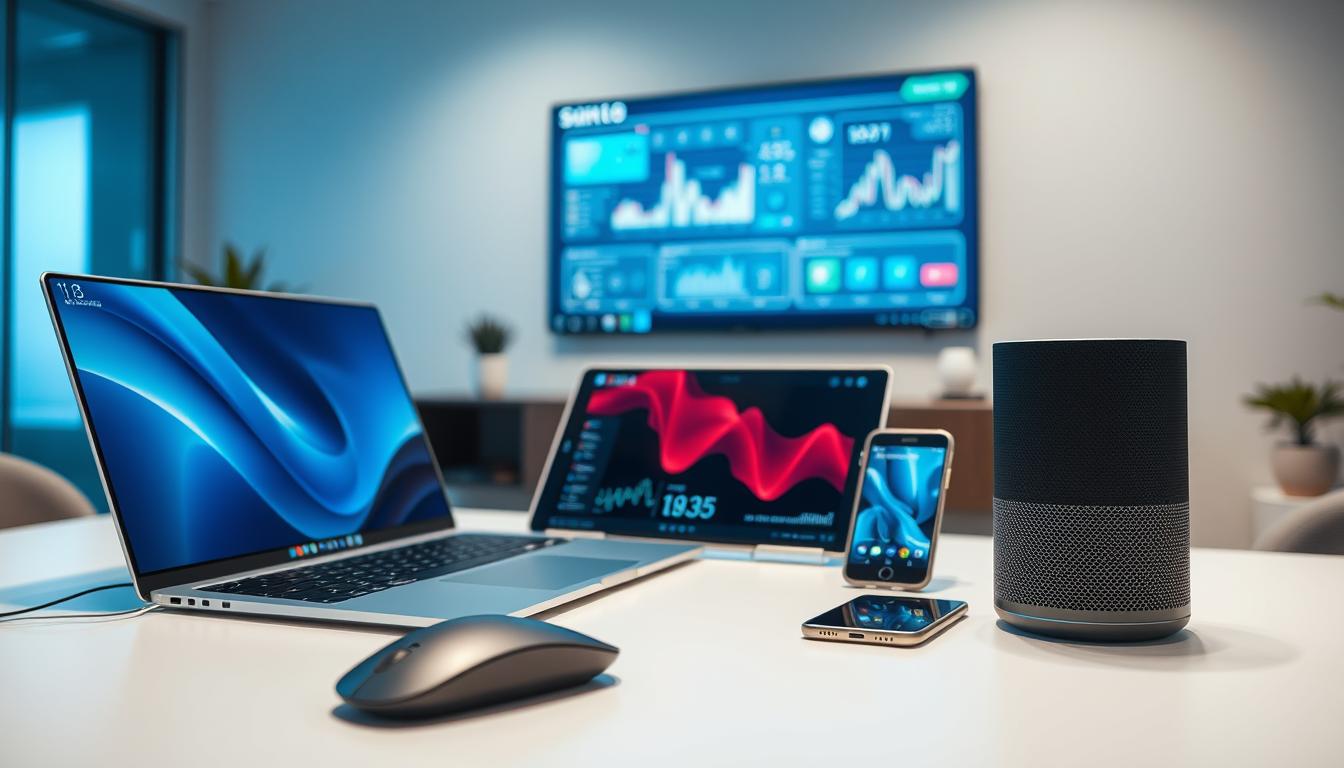
Tech gadgets are now woven into the fabric of our daily routines. From the alarm that wakes us up to the smart lights we turn off at night, these items are constant companions. They are designed to solve problems, save precious time, and make life more convenient.
A single piece of technology can now replace many traditional tools. Consider a smartwatch. It tracks your heart rate, counts your steps, and keeps you connected. This shift toward multifunctional gadgets is a defining feature of contemporary tech.
The average American home now contains more than twenty connected devices. This number includes everything from smartphones to smart speakers. It continues to grow as these powerful tools become more affordable and easier to use.
This guide will help you make sense of this evolving landscape. We will explore what these gadgets are, why they matter, and how to pick the right ones for your needs. Whether you’re new to smart tech or a seasoned user, this information will be valuable.
Key Takeaways
- Technology gadgets are essential problem-solving tools in everyday life.
- Modern devices save time and increase convenience for users.
- Many current gadgets combine multiple functions into one unit.
- The average household owns a significant number of connected devices.
- This guide aims to help readers navigate and choose appropriate technology.
- These tools are no longer luxuries but integral parts of how we live.
Overview of Modern Devices and Their Impact
Contemporary living spaces are now filled with interconnected tools that redefine our routines. This overview examines how these items shape modern life and deliver tangible benefits.
Technological Shifts in Daily Life
Recent years brought significant changes in how we use tech. Single-purpose electronics gave way to multi-functional devices. A smartphone now handles tasks that once required several separate tools.
This shift affects morning routines, work schedules, and evening relaxation. Gadgets seamlessly blend into each part of the day. They create smoother transitions between activities.
Benefits of Smart Device Integration
Integration delivers clear advantages. Automation boosts efficiency by reducing manual effort. Better communication keeps people connected across distances.
Wearable tech provides real-time health insights. Entertainment arrives on demand, saving precious time. As Matt Mullenweg noted,
“Technology is best when it brings people together.”
Studies show households average over twenty connected devices. This creates ecosystems where gadgets work together. The result is greater convenience and accessibility in daily tech use.
Understanding Modern Devices: A Deep Dive
Innovative gadgets now serve as multi-functional companions in our daily lives. To truly grasp their capabilities, we need clear definitions of the fundamental concepts.
Defining Key Concepts and Terminologies
Tech gadgets are compact electronic tools designed for efficiency. They combine hardware with smart software to simplify everyday tasks. This represents a significant shift from traditional single-purpose electronics.
The main difference lies in connectivity and adaptability. Modern gadgets feature sensors that detect environmental changes. They also offer personalization through regular software updates.
| Feature | Traditional Electronics | Smart Gadgets |
|---|---|---|
| Primary Function | Single-purpose tasks | Multi-functional capabilities |
| Connectivity | Limited or none | Wi-Fi, Bluetooth, IoT integration |
| Software Updates | Rare or never | Regular improvements |
| Adaptive Features | Fixed functionality | Learning and personalization |
At their core, these devices rely on integrated circuits and transistors. These components process electrical signals to execute commands. The system works seamlessly to deliver intelligent functionality.
Various types of gadgets exist for different needs. Each form serves specific purposes while sharing common technological foundations. This information helps users make informed choices about their tech investments.
Evolution of Device Systems and Technologies
The journey from basic electronics to intelligent systems has transformed how we interact with technology. This evolution represents one of the most significant shifts in recent years.
From Traditional Electronics to Smart Gadgets
Traditional electronics served single purposes with limited capabilities. A basic television simply displayed broadcast signals. DVD players only read discs. These tools remained unchanged for years.
Smart gadgets introduced a fundamental difference. They connect to networks and learn from user behavior. This creates personalized experiences that evolve over time.
| Feature | Traditional Electronics | Smart Gadgets |
|---|---|---|
| Connectivity | None or limited | Wi-Fi, Bluetooth, cellular |
| Updates | Rare or never | Regular software improvements |
| Adaptability | Fixed functions | Learning capabilities |
| Lifespan | Static functionality | Evolving features |
Advancements in AI, IoT, and Cloud Computing
Artificial Intelligence enables gadgets to anticipate needs. These systems analyze patterns to provide relevant suggestions. As tech pioneer Andrew Ng observed,
“AI is the new electricity.”
Internet of Things creates interconnected ecosystems. Devices communicate seamlessly within smart homes. Cloud computing powers real-time synchronization across platforms.
These advancements work together to create sophisticated tech environments. They represent the next phase in computing evolution.
Key Components and Design Principles
Behind every smart gadget lies a sophisticated combination of hardware engineering and software development. These elements work together to create the seamless experiences we enjoy with today’s tech.
Hardware Innovations and Efficient Power Supplies
Physical components form the foundation of any electronic system. Processors have become incredibly powerful while consuming less energy. This balance between performance and power consumption is crucial.
Memory capacity continues to expand, allowing for more complex applications. Display technologies offer sharper images with better color accuracy. Miniaturization packs impressive capabilities into compact form factors.
| Component | Traditional Specs | Current Innovations | Impact on User Experience |
|---|---|---|---|
| Processor | Single-core, high power draw | Multi-core, energy-efficient chips | Faster performance, longer battery life |
| Memory | Limited RAM, slow storage | High-speed RAM, SSD storage | Smooth multitasking, quick app loading |
| Power System | Basic batteries, slow charging | Advanced power supplies, fast charging | All-day usage, quick recharge times |
| Connectivity | Limited ports, basic wireless | Multiple options, high-speed wireless | Seamless device integration |
Software, Sensors, and User-Focused Design
Operating systems and applications create the interactive layer of tech products. They translate hardware capabilities into useful functions. Software architecture prioritizes efficiency and responsiveness.
Sensors enable smart functionality in contemporary electronics. Accelerometers detect movement, while gyroscopes measure orientation. Biometric scanners provide security through unique identifiers.
User-centered design principles guide interface development. These designs focus on intuitive navigation and accessibility. The goal is meeting diverse user needs through thoughtful planning.
Cross-device synchronization has become essential. This approach ensures seamless experiences across multiple platforms. Good design balances aesthetic appeal with practical functionality.
Modern Devices in Everyday Life
Today’s interconnected world relies heavily on technology that keeps people connected across distances. These tools have become essential for maintaining relationships and professional connections in our daily routines.
Enhancing Communication and Connectivity
Smartphones serve as central hubs for all communication needs. They combine calling, texting, email, and social networking in one portable device.
Different platforms serve specific communication purposes. Social media like Facebook and TikTok help with content sharing. Messaging apps such as WhatsApp provide instant group chats. Video calls through Zoom enable face-to-face conversations anywhere.
| Platform Type | Primary Function | Key Benefits | Popular Examples |
|---|---|---|---|
| Social Media | Content sharing & networking | Broad audience reach | Facebook, Twitter, TikTok |
| Messaging Apps | Instant communication | Real-time conversations | WhatsApp, Telegram, iMessage |
| Video Conferencing | Visual meetings | Personal connection | Zoom, Skype, FaceTime |
The average user checks their smartphone over 90 times daily. This shows how deeply these tools are embedded in modern life. They help professionals maintain productivity while working remotely.
Cloud-based applications sync across multiple devices. This ensures seamless workflow transitions between locations. Notification management features help prevent communication overload during work hours.
Smart Integration and Ecosystem Connectivity
Individual gadgets transform into powerful networks through seamless digital connections. Today’s electronics work together as cohesive systems rather than standalone products. This integration creates smart environments that adapt to user preferences.
Smart integration allows tools from different manufacturers to communicate through common protocols. Platforms like Apple HomeKit and Google Home enable this cross-brand coordination. They create unified control interfaces for multiple systems.
| Platform | Core Technology | Key Features | Compatible Brands |
|---|---|---|---|
| Apple HomeKit | Home app integration | Siri voice control, privacy focus | Philips, Lutron, Eve |
| Google Home | Google Assistant | Multi-room audio, routines | Nest, TP-Link, GE |
| Amazon Alexa | Alexa voice service | Skills library, smart groups | Ring, Ecobee, Sonos |
| Samsung SmartThings | Hub connectivity | Automation scenarios, energy monitoring | Yale, Aeotec, Fibaro |
Ecosystem connectivity offers significant benefits. Users create automation routines that trigger multiple actions. Voice commands control lighting, temperature, and entertainment across different devices.
Compatibility remains crucial when adding new tech. Check if products work with your existing smartphone or operating system. Support for open standards ensures long-term flexibility rather than proprietary limitations.
Successful integration creates compound value. The complete ecosystem becomes more useful than individual components. Smart displays serve as central hubs managing multiple connected systems efficiently.
The Role of AI and Machine Learning in Enhancing Devices
The integration of AI capabilities has transformed passive gadgets into intelligent assistants. Artificial intelligence serves a crucial role in today’s tech landscape, making electronics more responsive and personalized.
These advancements create tools that anticipate needs rather than simply respond to commands. The shift represents a fundamental change in how we interact with technology.
Predictive Personalization and Real-Time Adaptation
Machine learning algorithms analyze user behavior patterns to deliver personalized experiences. They process vast amounts of information to predict what users need before they ask.
Smart thermostats learn household routines to optimize temperature settings. Music services recommend songs based on listening history. These features demonstrate real-time adaptation within the system.
| Device Category | AI Feature | User Benefit |
|---|---|---|
| Smart Assistants | Proactive task scheduling | Reduces manual planning effort |
| Wearable Tech | Health anomaly detection | Early warning for medical issues |
| Smart Cameras | Facial recognition | Enhanced security and automation |
| Voice Systems | Natural language processing | More intuitive interactions |
“AI doesn’t replace human decision-making—it enhances it.”
This machine learning approach continuously improves as devices gather more data about user behavior. The result is increasingly sophisticated tech that adapts to individual preferences over time.
Energy Efficiency and Power Innovations
The push for sustainable electronics has led to remarkable breakthroughs in power management systems. Consumers now prioritize energy-efficient gadgets that reduce environmental impact while lowering ownership costs.
Advances in Battery Technology
Battery life has seen dramatic improvements through lithium-polymer cells and fast-charging capabilities. These innovations enable all-day wearable tech and multi-day smartwatches that were once impractical.
Wireless charging and intelligent power management systems optimize consumption based on usage patterns. This adaptive approach extends both battery lifespan and overall device usability.
Low-power processors maintain high performance while reducing electricity consumption. Smart thermostats demonstrate this efficiency by learning household routines and adjusting temperature settings automatically.
Emerging technologies like solid-state batteries promise even greater energy density. These advancements contribute to reduced carbon footprints while saving consumers time and money on electricity bills.
Choosing the Right Devices for Your Needs
Selecting the perfect electronic tools involves balancing practical needs with budget considerations. This process ensures your tech investments deliver real value.
Assessing Features Against User Requirements
Start by identifying what problem each gadget solves. Will you use it daily or occasionally? Products that address frequent needs offer better value.
Compatibility matters greatly. Check if new tech works with your existing smartphone and operating system. Seamless integration creates a smoother experience.
More features don’t always mean better performance. Choose products with functions you’ll actually use. Avoid complicated interfaces that frustrate.
Cost vs. Long-Term Value Considerations
Price tiers serve different user needs. Budget options work for simple tasks. Mid-range products balance features and affordability.
Premium tech suits power users requiring advanced capabilities. Consider long-term costs like software updates and support duration.
Build quality affects durability. Research materials and manufacturer reputations. A helpful guide to choosing a device can support your decision-making.
Make informed decisions by evaluating total ownership costs. If tech doesn’t save time, money, or effort, reconsider the purchase.
Maximizing Efficiency and Control with Modern Devices
The true power of today’s technology lies in its ability to automate routine activities. These systems handle repetitive tasks that once required manual effort. This automation provides users with greater control over their environments.
Automated Tasks and Smart Home Integration
Smart home systems demonstrate this efficiency perfectly. A single command can trigger multiple actions simultaneously. This eliminates the need for individual task management.
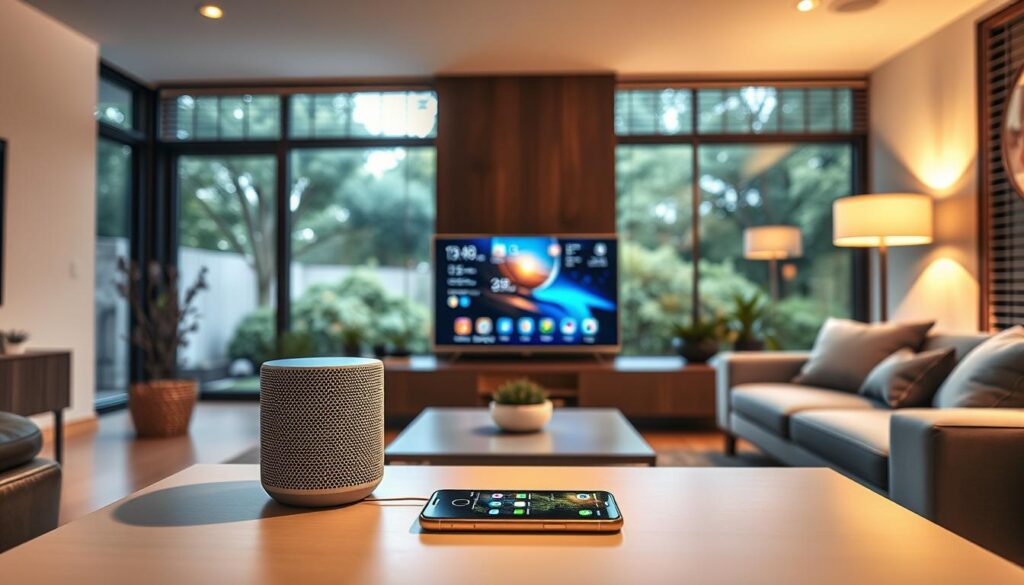
Consider a nighttime routine example. The system turns off lights, locks doors, and adjusts temperature automatically. What required several steps now happens seamlessly.
| Manual Task | Automated Solution | Time Saved |
|---|---|---|
| Adjusting thermostat multiple times daily | Smart temperature control learning patterns | 15 minutes per day |
| Turning off lights room by room | Voice-activated whole-home lighting control | 10 minutes per day |
| Manual door locking checks | Automated smart lock system | 5 minutes per day |
| Individual device management | Integrated ecosystem routines | 30 minutes per day |
Remote workers gain significant benefits from these tools. Research shows proper tech combinations can save up to two hours daily. Noise-canceling headphones reduce distractions effectively.
Smart lighting adjusts based on natural circadian rhythms. Productivity apps sync with wearables for break reminders. Voice assistants handle scheduling automatically.
This automation reduces mental load considerably. Routine decisions become automated, freeing cognitive resources. Users gain real-time insights for better energy and work pattern decisions.
Systems and Tools That Enhance Productivity
The right combination of technological systems can dramatically improve work output and reduce mental fatigue. These specialized tools help professionals accomplish more in less time.
Wearable Devices and Remote Work Tools
Smartwatches and fitness trackers monitor activity levels throughout the work day. They provide reminders to stand up and move around. This helps maintain healthy work patterns.
Remote work tools include portable monitors for extended screen space. High-quality webcams ensure professional video calls. These tech solutions create effective home offices.
| Productivity Tool | Primary Benefit | Best For | Key Feature |
|---|---|---|---|
| Noise-canceling headphones | Distraction-free focus | Open office environments | Ambient sound elimination |
| Portable monitors | Extended workspace | Remote professionals | Dual-screen capability |
| Smart planners | Task organization | Project managers | Cross-device synchronization |
| Ergonomic keyboards | Strain reduction | Long-hour typists | Wrist support design |
Ergonomic and Digital Note-Taking Solutions
Specially designed keyboards and mice reduce physical strain during extended work sessions. Standing desk converters promote better posture. These tools prevent work-related injuries.
Digital note-taking systems use tablets with stylus support. Cloud-synced applications make information searchable across devices. Students using these tools retain information better.
A consulting firm saw 30% improvement in meeting efficiency after introducing productivity gadgets. Proper tech integration saves valuable time. The right operating system compatibility ensures seamless workflow.
Impact of Modern Devices on Communication and Entertainment
Communication and entertainment have undergone a seismic shift thanks to contemporary tech. This overview explores how these tools reshape social connections and leisure for people of all ages.
Gone are the days of waiting for letters or scheduled phone calls. Instant messaging and video calls now enable face-to-face conversations across any distance. Social media platforms keep friends and family connected with a constant stream of shared information.
Entertainment consumption is equally transformed. Streaming services like Netflix and Hulu provide vast libraries of movies and TV shows on demand. Music platforms such as Spotify use smart algorithms to create personalized playlists based on your listening habits.
Gaming systems like PlayStation and Xbox push hardware boundaries. They deliver immersive experiences with advanced graphics and responsive controls. This constant innovation in entertainment tech often leads the entire industry.
| Entertainment Platform | Primary Content | Key Feature | Access Device |
|---|---|---|---|
| Netflix, Hulu, Disney+ | Movies & TV Series | On-demand streaming | Smart TVs, Tablets, Phones |
| Spotify, Apple Music | Music & Podcasts | Personalized recommendations | Smart Speakers, Wearables |
| PlayStation, Xbox, PC | Interactive Games | Immersive graphics & audio | Consoles, Computers |
These platforms often combine functions. A single device can be a communication hub, information source, and entertainment center. This integration affects different age levels in unique ways, changing how we socialize and relax.
Innovative Designs and Future Trends
Tomorrow’s electronics are taking shape today through groundbreaking design principles and eco-conscious engineering. The landscape of personal tech is evolving toward smarter intelligence and deeper personalization.
Emerging Technologies and Sustainable Designs
Sustainability now drives innovation across the tech industry. Manufacturers use recyclable materials and modular components for easy repairs.
Low-power processors deliver impressive performance while conserving energy. These chipsets extend battery life significantly. Processing power continues to increase despite smaller physical sizes.
Design approaches may vary between product categories. However, they share common themes of efficiency and user-centric innovation.
Next-Generation Connectivity and Display Innovations
Wi-Fi 7 and 5G expansion enable faster data transfer with lower latency. Ongoing research explores 6G capabilities for future connectivity.
Display technology advances include micro-LED screens and higher refresh rates. Adaptive brightness systems reduce eye strain during extended use.
Current tech prioritizes long-term use over planned obsolescence. Privacy considerations are built into the design process from the beginning.
Looking ahead 5-10 years, ambient computing and brain-computer interfaces represent exciting frontiers. Seamless augmented reality integration will transform how we interact with digital content.
User-Centric Perspectives on Device Integration
Successful technology adoption begins with recognizing that one size does not fit all when it comes to device selection. Different users have varying comfort levels and requirements for their tech tools.
Guidance for Beginners and Tech Enthusiasts
If you’re new to electronics, start with simple, user-friendly devices. Build confidence through regular practice with basic functions. Online platforms like Coursera and Khan Academy offer excellent beginner tutorials.
Hands-on experimentation is crucial for learning. Try different applications and explore features through trial and error. This approach helps you understand which types of tech suit your behavior patterns.
Practical Tips for Informed Decisions
Before purchasing, research thoroughly to make informed choices. Read user reviews and understand return policies. Consider how frequently you’ll use each device and its primary purpose.
Different user groups need specific approaches. Students may prioritize portability, while families might focus on durability. Seniors often benefit from simplified interfaces. The starting point should always be understanding your unique needs.
Don’t hesitate to seek help from tech-savvy friends or online communities. This overview of common mistakes can prevent overbuying features or choosing incompatible tools. The goal is choosing right equipment that enhances rather than complicates your life.
Addressing Common Issues in Modern Device Usage
Even the most reliable electronics occasionally present challenges that require troubleshooting. Many common problems have simple solutions that users can implement without professional help.
Troubleshooting Connectivity and Software Updates
Connectivity problems often stem from simple causes. Restarting your router can resolve many Wi-Fi connection issues. For Bluetooth pairing failures, try removing the device from your list and re-pairing.
Software updates sometimes fail due to insufficient storage space. Always check available memory before installing updates. If an update causes compatibility issues, most operating system options allow rolling back to previous versions.
System performance problems like slow operation may indicate too many background apps. Regularly closing unused applications can improve speed. The troubleshooting approach may vary depending on your specific devices and software.
Battery drain often results from power-hungry applications running in the background. Check your battery usage settings to identify culprits. Maintaining control over your devices use patterns helps prevent many common tech issues before they occur.
When self-troubleshooting doesn’t resolve the problem, manufacturer support sites offer detailed guides. Online communities provide valuable insights from other users experiencing similar tech challenges. Most connectivity and software issues have documented solutions available.
Conclusion
Navigating today’s technological ecosystem requires both practical knowledge and adaptable thinking skills. This overview has shown how tech plays a critical role in daily life across all experience levels.
Different types of tools serve unique purposes in communication, work, and entertainment. The key point is choosing equipment that matches your specific needs. With time and practice, anyone can build confidence.
Remember that learning technology is an ongoing journey. Start with simple steps and seek help when needed. Soon you’ll master your devices and even assist others on their digital path.