
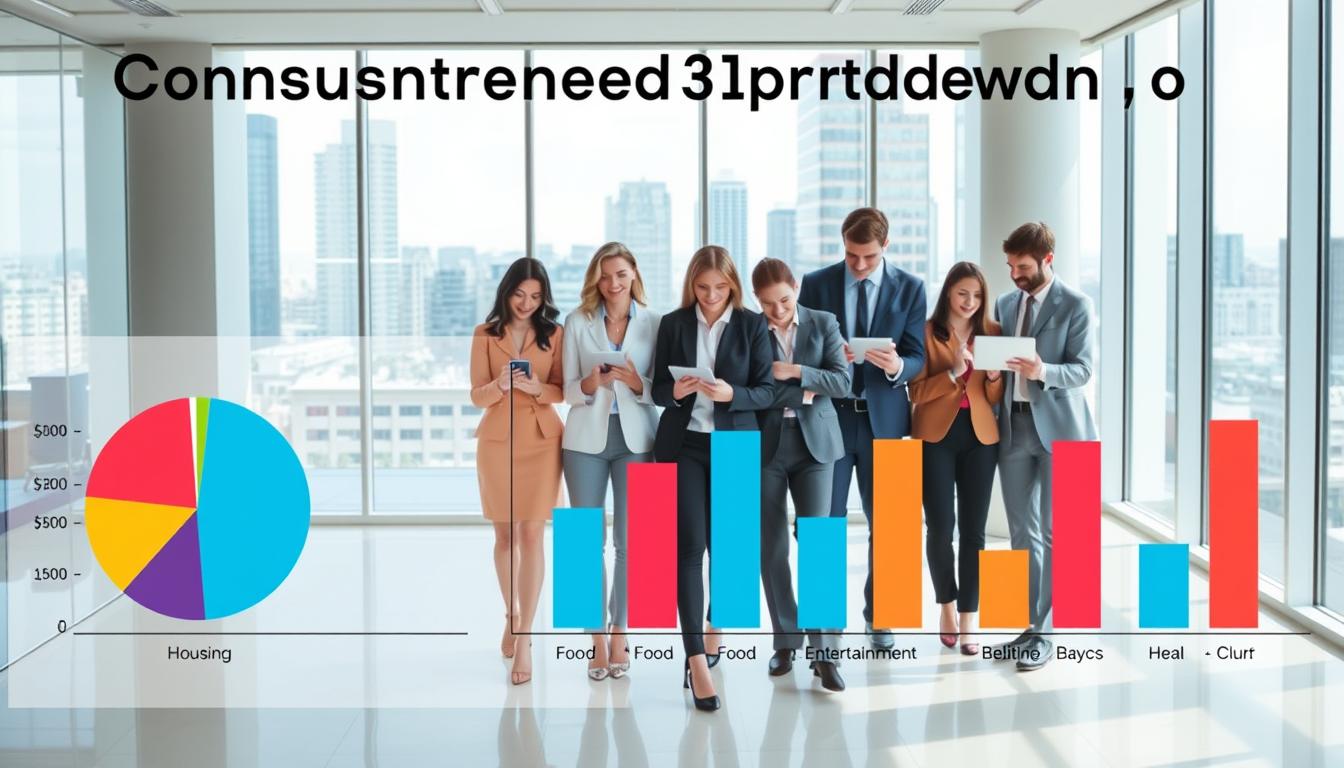
American consumer behavior reveals fascinating patterns in financial decision-making. Recent data shows a complex relationship between immediate gratification and long-term planning.
According to a December 2023 Empower survey, many Americans face financial uncertainty. The study found that 41% don’t consider themselves financially “well-off.” Yet 42% go shopping to treat themselves monthly, with 21% doing so weekly.
This analysis explores where American dollars actually go. It examines essential expenditures like housing and transportation alongside discretionary purchases. The breakdown considers different income levels and generational differences.
Consumer behavior has evolved significantly with digital retail and social media influence. Understanding these patterns provides critical insights into economic trends. The data helps illuminate financial challenges facing various population segments.
Interestingly, 73% of survey respondents expressed willingness to cut daily expenses for future goals. This highlights the balance between present enjoyment and financial security.
Key Takeaways
- Many Americans engage in regular retail therapy despite financial concerns
- A significant majority prioritizes long-term savings over daily indulgences
- Consumer expenditures reveal patterns across generations and income brackets
- Digital platforms and social media increasingly influence purchasing decisions
- Essential costs like housing compete with discretionary spending for budget allocation
- Economic conditions and inflation directly impact daily financial choices
- Understanding these behaviors helps predict broader economic trends
Understanding the Evolution of Consumer Spending
Consumer expenditure patterns have evolved through distinct phases marked by technological and economic milestones. The shopping experience has transformed significantly over time, with digital retail and social media fundamentally reshaping purchasing approaches.
Historical Shifts and Economic Influences
Economic cycles have consistently shaped consumer spending priorities throughout history. Recessions and periods of prosperity created different financial behaviors across generations. Each era reflected unique responses to employment patterns and economic conditions.
Wage stagnation combined with rising essential costs forced continuous reassessment of financial allocation. This economic pressure created a complex landscape where habits adapt to new realities. The growth of certain sectors often came at the expense of others.
The Role of Emerging Technology and Retail Trends
E-commerce growth moved significant portions of expenditure from traditional stores to digital platforms. Retail evolution progressed from department stores to big-box retailers to omnichannel experiences. This transformation occurred alongside cultural shifts that redefined shopping behaviors.
Social media introduced new dimensions to purchasing decisions through visual lifestyle showcases. Information sources multiplied with digital channels offering reviews and comparisons. Subscription services represent a modern shift from ownership to access models.
Understanding this evolution provides context for current financial behaviors. It explains why allocation differs from previous generations at similar life stages.
Historical Trends and the Impact of Inflation
The Bureau of Labor Statistics’ annual surveys provide compelling evidence of inflation’s persistent influence on purchasing behaviors. These longitudinal studies track expenditure patterns across multiple years, revealing consistent responses to economic pressures.
Data Insights from Past Surveys
Consumer Expenditure Survey data collected over decades shows how households adapt their financial allocation. The 2016 survey revealed detailed breakdowns across income levels, while the 2023 Empower survey demonstrated direct behavioral changes.
Twenty-nine percent of Americans reported eating out less frequently due to inflation concerns. This data illustrates immediate adjustments in discretionary spending when prices rise.
The Influence of Rising Costs on Consumer Decisions
Inflation affects different categories unevenly, with essential goods often experiencing the steepest price increases. Households typically reduce entertainment and dining expenditures before cutting necessities.
Year-over-year comparisons show predictable patterns during inflation cycles. Consumers seek value alternatives and increase price sensitivity across most product categories.
Gasoline price fluctuations have immediate impacts, with 66% combining errands to reduce fuel expenses. Understanding these historical responses helps predict future consumer behavior during economic changes.
How People Spend Money: An In-Depth Analysis
Daily expenditure patterns reveal complex psychological drivers behind routine financial decisions. Regular shopping activities provide windows into emotional landscapes that shape purchasing behaviors.
Daily Purchases and Non-Essential Spending
Survey data shows significant patterns in discretionary expenses. Forty-two percent of Americans treat themselves with shopping monthly, while twenty-one percent indulge weekly.
Emotional catalysts trigger substantial portions of retail activity. Celebratory moments account for thirty-two percent of impulse purchases. Boredom drives twenty-five percent of non-essential spending.
Job-related stress prompts twenty percent of consumers to make comfort purchases. These emotional responses demonstrate that financial allocation extends beyond practical needs.
Small, frequent purchases accumulate into substantial annual expenses. Consumers often underestimate these cumulative costs in their budgeting.
The distinction between essential and discretionary expenses reveals psychological value. Non-essential spending serves purposes like stress relief and personal enjoyment.
Understanding these patterns helps identify financial flexibility. Consumers can adjust discretionary expenses when working toward savings goals.
Consumer Behavior in the Digital Age
Digital platforms have fundamentally reshaped purchasing decisions in recent years. The convenience of online shopping and social media influence created new consumer pathways.
This transformation represents a significant shift in how individuals approach their financial choices. The digital landscape offers both opportunities and challenges for modern consumers.
Social Media’s Role in Shaping Spending Habits
Social platforms function as virtual showrooms where curated lifestyles influence purchasing desires. Nearly a quarter of Gen Z feel pressured to showcase wealth online.
Scrolling through social media triggers negative feelings for 47% of Americans viewing wealth displays. This emotional response can moderate actual spending despite digital influence.
The growth of influencer marketing creates perceived needs among viewers. People compare their possessions against carefully crafted online images.
Shifts Toward Online Retail and Digital Transactions
Online retail growth enables 24/7 shopping without geographical constraints. Digital payment methods create psychological distance between purchases and financial impact.
Forty-two percent of consumers have reduced impromptu online purchases for long-term savings. Gen Z leads this trend at 47%, showing awareness of digital spending pressures.
Mobile commerce allows impulse purchases during idle moments throughout the day. This changes the rhythm of consumer spending from periodic trips to frequent small purchases.
The digital age provides pricing transparency while introducing new marketing persuasion techniques. Consumers navigate between informed decisions and impulse-driven purchases.
Breakdown of Major Spending Categories
Three primary expenditure areas dominate household financial planning across income levels. These core categories consistently represent the largest portions of American budgets.
Housing, Utilities, and Household Expenses
Housing consistently ranks as the top expenditure category. This includes mortgage or rent payments, property taxes, and utilities. Higher-income groups invest more in home ownership while lower-income households allocate larger budget portions to rent.
Utility costs remain relatively stable across income brackets. Basic electricity, water, and heating needs don’t vary dramatically with income. However, larger homes naturally incur higher utility expenses.
Food, Dining Out, and Beverage Trends
Food expenditures divide into two distinct patterns. Grocery shopping represents food at home spending, while restaurant meals constitute food away from home expenses.
Americans dine out for approximately 20% of their meals. Dinner remains the most popular meal for eating out. Gen Z leads all generations, dining out for 26% of their meals.
Transportation and Travel Expenditures
Transportation costs increase steadily with income levels. This category encompasses vehicle purchases, gasoline, maintenance, and public transportation. Commute requirements and lifestyle choices significantly influence these expenditures.
Travel spending spikes dramatically at higher income brackets. Airline tickets and other transportation show the most pronounced income-based variation. Discretionary travel represents a key area where additional income translates into increased spending.
Income Levels and Variation in Spending Patterns
Financial allocation reveals stark contrasts when examined across economic brackets. Consumer Expenditure Survey data demonstrates that different income groups allocate budgets in fundamentally distinct ways.
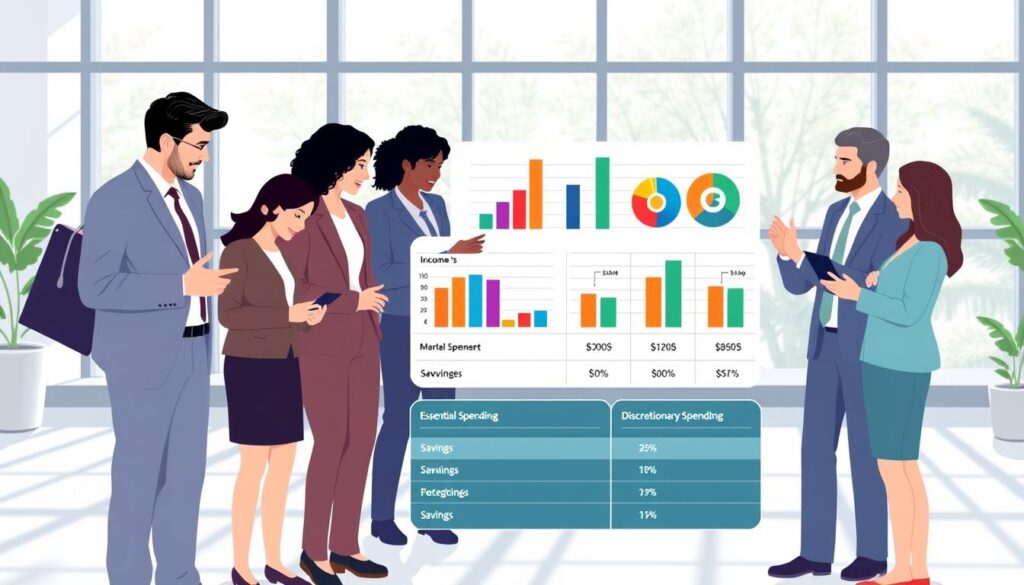
Lower-income households face the challenging reality where average annual spending often exceeds earnings. This indicates reliance on credit, savings depletion, or assistance programs.
Comparing Lower and Higher Income Group Behaviors
As income increases, the proportion dedicated to absolute necessities decreases significantly. Higher-income households gain flexibility for discretionary expenses and future planning.
The most dramatic variation appears in categories like housing ownership and transportation. These expenditures show strong correlations with rising income levels.
Insights on Personal Insurance, Pensions, and Savings
Personal insurance and pensions represent the category with the most extreme divergence. Retirement savings become nearly impossible for lower earners but substantial for higher-income groups.
The highest income bracket allocates an average of $29,800 annually to insurance pensions. This exponential growth reflects having discretionary income after covering living expenses.
Middle-income levels show transition patterns where households begin serious retirement investing. They still face constraints on discretionary spending while building financial security.
Lifestyle Factors Influencing Spending Habits
Lifestyle influences extend beyond income brackets to determine financial allocation. Personal circumstances and emotional states frequently shape purchasing decisions more than pure economic rationality.
Survey data reveals that emotional catalysts significantly impact consumer expenditure patterns. Nearly half of Americans treat themselves monthly, while over twenty percent indulge weekly.
Emotional Triggers: Celebration, Boredom, and Stress
Celebratory moments trigger thirty-two percent of non-essential purchases. Individuals feel justified in commemorating special occasions through retail indulgence.
Boredom accounts for twenty-five percent of discretionary expenses. Younger generations particularly use shopping as entertainment during idle moments.
“Financial decisions often reflect emotional needs rather than practical necessities. Understanding these triggers helps explain seemingly irrational purchasing behaviors.”
Job-related stress prompts twenty percent of comfort purchases. This represents a coping mechanism for managing workplace pressures.
| Emotional Trigger | Percentage of Purchases | Most Affected Generation |
|---|---|---|
| Celebration | 32% | Millennials |
| Boredom | 25% | Gen Z |
| Stress | 20% | Gen X |
These lifestyle factors demonstrate that consumer behavior serves psychological functions. Purchasing provides emotional management beyond meeting basic needs.
The way individuals allocate their money reveals underlying emotional landscapes. Effective financial planning requires addressing both budgetary numbers and psychological drivers.
Survey Insights and Data Collection Methodology
Survey methodology provides the foundation for understanding consumer expenditure patterns across the United States. The reliability of insights depends heavily on proper data collection techniques and representative sampling.
Different approaches yield complementary perspectives on financial behaviors. Both private sector and government data collection methods contribute valuable insights.
Overview of the Empower Survey of 1,000 Americans
Empower commissioned a significant survey during December 2023. This research captured insights from 1,000 participants across diverse demographic groups.
The timing provided unique holiday season perspectives. Survey results reflected seasonal influences on financial decisions.
Methodological Approaches and Data Reliability
The Bureau of Labor Statistics maintains rigorous standards for its Consumer Expenditure Survey. This annual program offers comprehensive expenditure breakdowns.
Government surveys employ sophisticated sampling techniques. They ensure national representativeness across income levels and generations.
| Survey Source | Sample Size | Primary Focus | Timeframe |
|---|---|---|---|
| Empower Survey | 1,000 Americans | Recent attitudes and behaviors | December 2023 |
| Bureau of Labor Statistics | Nationally representative | Comprehensive expenditure data | Annual collection |
Multiple data sources strengthen analysis through cross-validation. Each approach contributes unique dimensions to understanding financial allocation.
Methodological transparency helps readers evaluate conclusion strength. Recognizing survey limitations ensures proper interpretation of results.
Conclusion
The most revealing insight into modern consumer behavior is the overwhelming priority placed on future financial security. Survey data confirms that a significant majority are prepared to adjust daily spending to achieve long-term objectives.
Despite evolving retail landscapes and digital growth, fundamental patterns in major expenditure categories like housing and transportation remain consistent. These core expenditures form the foundation of every household budget.
Price pressures and the rise of services spending continue to shape financial decisions. Yet, values-based cash contributions persist, demonstrating that allocation of money reflects both rational needs and emotional values.
These insights paint a comprehensive picture of financial decision-making. It is a dynamic balance between immediate realities and future aspirations.