
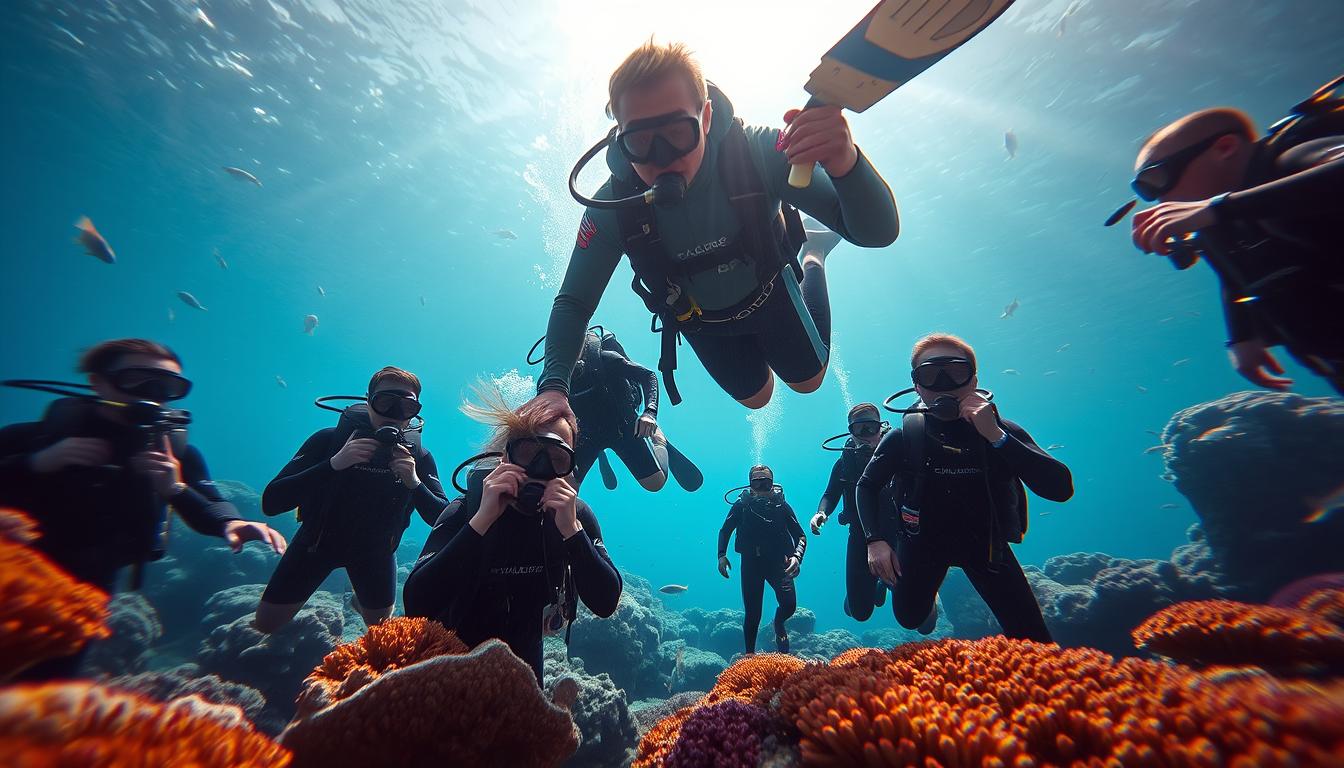
Have you ever dreamed of exploring the ocean’s depths? The world beneath the waves is full of amazing sights. Scuba diving opens the door to this incredible adventure. It lets you swim with colorful fish and see beautiful coral reefs up close.
Starting this journey requires proper preparation. A structured educational program is the first step. This process combines classroom learning with hands-on practice in a pool. You will master essential skills in a safe, controlled environment before heading to open water.
The ultimate goal is to earn a certification. This credential shows you have the knowledge and ability to dive safely. It is your passport to discovering the underwater world with confidence. This guide explains the entire path from beginner to certified diver.
Key Takeaways
- Scuba diving training provides safe access to underwater exploration.
- The process is structured, combining theory, confined water practice, and open water dives.
- Certification is the final goal, proving a diver’s competence and understanding of safety.
- Modern courses often include flexible eLearning options for the academic portion.
- Becoming a certified diver requires learning essential skills and demonstrating proficiency.
Introduction to Dive Training
Learning to explore underwater environments safely requires systematic preparation. This educational process teaches individuals the essential abilities needed for aquatic adventures. Scuba diving instruction follows established standards to ensure consistent safety.
Entry-level programs use formal training structures developed by certification agencies. These courses combine theoretical learning with practical application. The curriculum covers physics, physiology, and environmental awareness.
Students develop hands-on abilities through structured skill demonstrations. Foundational knowledge includes pressure effects and equipment maintenance. Safety procedures form a critical component of every lesson.
Successful completion leads to official recognition of competence. Modern programs balance accessibility with rigorous safety standards. This makes underwater exploration achievable for diverse age groups.
The certification process validates a person’s readiness for aquatic adventures. It demonstrates understanding of depth limits and environmental conditions. This credential serves as proof of acquired diving proficiency.
Exploring How Dive Training Works
Modern aquatic instruction utilizes a sequential approach to build diver competence. This educational framework ensures comprehensive skill development through distinct phases.
The process begins with theoretical foundations. Students learn about pressure effects and equipment operation. Safety protocols form a critical component of this initial stage.
Practical application follows in controlled environments. Pool sessions allow for skill mastery before open water exposure. This gradual progression builds confidence systematically.
| Training Phase | Primary Focus | Environment | Key Objectives |
|---|---|---|---|
| Theory Development | Knowledge Acquisition | Classroom/eLearning | Physics, safety, equipment |
| Confined Water | Skill Practice | Pool/Shallow Area | Basic maneuvers, emergency drills |
| Open Water | Application Assessment | Natural Environment | Real-world competency demonstration |
“The three-phase methodology represents decades of refined educational practice, balancing accessibility with rigorous safety standards.”
Entry-level programs typically require 20-30 hours of formal instruction. An additional 8-12 hours of independent study complements this structured learning.
This comprehensive approach ensures each participant develops essential abilities progressively. The system accommodates various learning styles while maintaining consistent quality standards.
Dive Knowledge Development Essentials
Building a strong theoretical foundation is the first step toward safe underwater exploration. This knowledge development phase covers essential principles that every participant must understand. The curriculum includes physics, equipment operation, and environmental awareness.
Understanding Dive Theory
Scuba diving courses teach practical applications rather than complex formulas. Students learn how pressure affects air spaces and the human body. They master ear equalization techniques without memorizing scientific equations.
The material is accessible to anyone aged ten or older. No advanced education is required. Comprehension matters more than memorization for real-world safety.
The Role of Classroom and eLearning
Modern programs often use digital platforms for theoretical learning. eLearning allows students to study at their own pace. This flexibility revolutionizes the educational process.
Instructors benefit from this approach too. They can focus more time on practical skill development. Understanding the “why” behind procedures enhances decision-making during actual dives.
This knowledge component ensures divers grasp equipment maintenance and environmental protection. Proper development creates confident, capable participants ready for water activities.
In-Water Skills: Confined Water Training
Mastering essential abilities begins in controlled aquatic settings with optimal conditions. This phase occurs in pool environments or shallow open water areas with excellent visibility. The setting provides psychological comfort while building foundational competence.
Participants start in water shallow enough to stand comfortably. This approach allows easy recovery if discomfort arises. Instructors demonstrate each technique before guiding practice sessions.
Mastering Basic Pool Skills
Fundamental maneuvers form the core of confined water sessions. Students learn buoyancy control through breathing techniques alone. Mask clearing and regulator recovery become second nature through repetition.
Underwater communication using universal sign language is introduced early. Each ability builds upon previously mastered techniques. Confidence grows systematically as complexity increases gradually.
Practicing Safety Drills
Emergency procedures receive significant attention during pool sessions. Buddy breathing and air-sharing techniques are practiced repeatedly. Out-of-air scenarios are simulated until responses become automatic.
Instructors ensure nobody feels rushed during challenging exercises. Additional practice time is always available upon request. Safety consciousness develops through realistic scenario training.
| Skill Category | Key Exercises | Learning Environment | Proficiency Goal |
|---|---|---|---|
| Buoyancy Control | Breath-based positioning | Shallow to mid-depth | Stable hovering |
| Equipment Management | Mask clearing, regulator recovery | Standing-depth water | Quick problem resolution |
| Emergency Procedures | Air sharing, ascent practice | Controlled pool setting | Automatic response |
| Communication | Hand signal mastery | Visual contact conditions | Clear underwater messaging |
This structured approach ensures solid foundation development. Participants emerge prepared for open water application with confidence.
In-Water Skills: Open Water Application
The transition from pool practice to ocean exploration marks a significant milestone in diver education. These checkout dives represent the final practical assessment before certification. Students demonstrate their accumulated abilities in natural aquatic environments.
Assessing Skills in Deep Water
Open water sessions typically involve four to six dives in deeper conditions. Participants reach depths up to 18 meters during these evaluations. The environment presents real challenges where immediate surfacing isn’t safe.
Instructors closely monitor each student’s performance throughout these dives. They assess buoyancy control, navigation, and communication skills. Equipment management and emergency response receive particular attention.
Successful demonstration of all required abilities leads to certification. This credential validates a person’s readiness for independent underwater adventures. The open water environment finally reveals the marine world students have prepared to explore.
Integrating eLearning in Dive Training
Digital platforms have transformed the educational landscape for aquatic sports. Online learning systems now handle the theoretical components of scuba certification. This approach allows students to build foundational knowledge before entering the water.
The flexibility benefits both students and instructors significantly. Participants can study at their own pace during evenings or weekends. This eliminates scheduling conflicts with work or personal commitments.
Benefits of Pre-Course Study
Starting online modules weeks before practical sessions creates optimal learning conditions. Students arrive with solid understanding of physics and safety procedures. This preparation makes pool sessions more productive and enjoyable.
Instructors can focus entirely on skill development during water time. They track progress through digital platforms to identify knowledge gaps. This system represents a significant advancement in scuba education methodology.
For vacation divers, completing theory beforehand maximizes underwater exploration time. Many programs offer comprehensive online courses covering all essential topics. Consider master dive training with PADI eLearning for flexible preparation.
The electronic approach maintains rigorous standards while enhancing retention. Interactive content and quizzes reinforce key concepts effectively. This modern learning path suits today’s busy lifestyles perfectly.
Understanding Scuba Equipment and Gear
Quality scuba gear performs three critical functions: breathing, buoyancy, and vision. Each component addresses the unique challenges of the underwater environment. Proper equipment knowledge ensures safe and enjoyable aquatic adventures.
The regulator stands as the most vital piece of diving equipment. This device reduces high-pressure gas from your tank to breathable pressure. It delivers air effortlessly regardless of depth or conditions.
“Your regulator serves as your underwater lifeline, making submerged breathing as natural as surface breathing.”
Key Equipment: Regulators and Tanks
Scuba tanks store compressed breathing gas in aluminum or steel cylinders. They undergo rigorous maintenance including visual inspections and hydrostatic testing. This ensures reliable performance during every underwater excursion.
Regulators attach directly to the tank valve system. They feature a primary breathing device and alternate air source. This backup allows emergency air sharing with your buddy.
Buoyancy Devices and Masks
The buoyancy compensating device (BCD) provides precise control in the water column. By adding or releasing air, divers achieve neutral buoyancy. This creates a weightless state for effortless movement.
A properly fitted mask creates essential air space for clear vision. It prevents water entry while maintaining a comfortable seal. Correct fit prevents leaks throughout your diving experience.
| Equipment Type | Primary Function | Key Feature |
|---|---|---|
| Regulator | Breathing assistance | Pressure reduction |
| Scuba Tank | Gas storage | High-volume capacity |
| BCD | Buoyancy control | Air inflation system |
| Diving Mask | Vision protection | Watertight seal |
Additional essential gear includes fins for propulsion and exposure protection. Weights counter natural buoyancy while gauges monitor remaining air. Complete equipment understanding forms the foundation of diving competence.
Prioritizing Safety Procedures
Rigorous safety protocols distinguish professional diving from casual aquatic activities. These measures form the foundation of every responsible underwater excursion. Proper planning and systematic checks prevent most potential issues before they arise.
Consistent application of safety standards builds confidence and competence. Divers learn to anticipate challenges rather than react to emergencies. This proactive approach ensures enjoyable experiences beneath the waves.
Conducting Buddy Checks
Before entering the water, partners verify each other’s equipment configuration. This mutual inspection confirms tank valves are open and regulators function properly. The check also validates BCD operation, weight adequacy, and computer readiness.
Buddy systems create an additional layer of protection throughout each excursion. Partners monitor each other’s air consumption and overall well-being. This collaborative approach enhances safety for both participants.
Emergency and Rescue Protocols
Training includes comprehensive emergency response preparation. Divers practice alternate air source use and controlled ascents. These skills become automatic through repeated confined water drills.
Professional operations maintain surface support and emergency oxygen equipment. Prevention through conservative practices remains the priority. Thorough preparation significantly reduces diving risks while building essential confidence.
Training Logistics and Time Considerations
The timeline for becoming a certified diver adapts to individual circumstances. Programs offer remarkable flexibility to accommodate different lifestyles and locations.
Entry-level programs require approximately 20-30 hours of formal instruction. An additional 8-12 hours of independent study completes the knowledge component.
Flexible Scheduling and Local Facilities
Vacation-based courses typically condense into 3-5 consecutive days. This allows travelers to complete certification during their holiday.
Local participants often spread the same content over several weeks. Weekend or evening sessions fit around work commitments perfectly.
| Schedule Type | Time Frame | Ideal For | Facility Needs |
|---|---|---|---|
| Intensive | 3-5 days | Vacationers | All components available |
| Extended | Weeks-months | Local residents | Flexible access required |
Local logistics significantly influence course timing. Pool availability and weather conditions affect scheduling. These factors don’t compromise educational quality when properly managed.
Dive centers with comprehensive facilities can mix components creatively. Limited-access locations may schedule elements sequentially. Both approaches deliver complete certification.
Modern programs make aquatic education accessible to diverse schedules. Whether you have a full week or just weekends available, quality instruction adapts to your timeline.
Comparing Recreational and Professional Diver Training
The world of underwater exploration offers two distinct educational tracks: one for leisure enthusiasts and another for career professionals. Understanding these differences helps individuals select the appropriate certification path for their specific goals.
Course Structure and Content
Recreational diver programs focus on personal enjoyment and safety during aquatic adventures. These courses prepare individuals for low-stress environments using familiar equipment. Entry-level certification typically limits depth to 18 meters with no decompression requirements.
Professional programs address occupational hazards and team responsibilities. This training includes legal duties, equipment maintenance, and work-specific skills. The recreational approach emphasizes gradual skill development through specialty courses.
Certification agencies self-regulate recreational standards to maintain affordability. Professional diving follows occupational safety legislation with stricter requirements. Course content reflects these fundamental purpose differences between leisure and work environments.
Recreational participants choose their dive partners freely. Professional teams operate under defined legal structures with specific duties. Both paths require solid foundational knowledge but serve dramatically different objectives.
Physical and Swimming Preparedness
Before entering the aquatic environment, participants must demonstrate basic swimming competence. This evaluation ensures everyone can handle the physical demands of underwater activities. Proper preparation creates a safer and more enjoyable experience.
Meeting Fitness Requirements
Certification programs include a swimming assessment to verify water comfort. The standard test involves a 200-meter swim without assistance. Some agencies allow a 300-meter swim using mask, fins, and snorkel.
Students must also float or tread water for ten minutes comfortably. This demonstrates confidence at the surface without equipment support. These requirements ensure basic aquatic ability before scuba instruction begins.
You don’t need Olympic-level athleticism to meet these standards. The goal is completing tasks without excessive stress or fatigue. Comfortable performance matters more than speed or style.
Medical screening identifies conditions that could create underwater risks. Heart issues, respiratory problems, or ear conditions require evaluation. Psychological readiness is equally important for safe diving.
If current fitness levels seem insufficient, pool practice before certification is essential. Building water confidence and swimming skills prepares you for success. This preparation enhances your overall scuba diving experience.
Certification and Competence Assessment
Certification serves as the official validation of a person’s readiness for independent aquatic adventures. This credential represents formal recognition by established organizations that an individual has met all requirements. The process ensures consistent standards across the global diving community.
Recognizing Prior Learning and Testing
Assessment methods verify that participants can perform essential skills comfortably and repeatedly. Written examinations test theoretical knowledge while practical evaluations confirm in-water abilities. This comprehensive approach ensures genuine competence rather than mere completion.
Major certification agencies like PADI, SSI, and NAUI maintain strict instructor standards. Each organization follows its own protocols while covering fundamentally similar content. Entry-level programs produce competent beginners capable of safe adventures within certification limits.
Some standards allow recognition of prior learning for experienced individuals. This system acknowledges documented skills when pursuing advanced credentials. The certification ladder enables progression from beginner to specialty levels over years.
Credentials remain permanent but skills can deteriorate without practice. Refresher courses help maintain proficiency after extended inactivity. Quality instructors ensure students truly understand material rather than just meeting minimum requirements.
Advanced Dive Skills and Sustainable Development
Advancing beyond basic certification opens new dimensions in underwater exploration. Modern scuba education emphasizes sustainable development through refined techniques. This approach builds upon foundational abilities with environmental responsibility.
Continuing education specialty courses develop expertise across multiple disciplines. Participants can pursue underwater navigation, deep diving, and wreck exploration. Each program enhances safety while expanding recreational opportunities.
Enhancing Buoyancy Control
Buoyancy mastery represents one of the most valuable advanced skills. Proper control enables precise depth maintenance without constant equipment adjustments. Divers conserve energy and air while moving gracefully.
Modern instruction emphasizes performing all skills while neutrally buoyant. This preparation mirrors real-world conditions where bottom contact isn’t possible. Advanced courses teach fine-tuning techniques including optimal weighting and breath control.
Excellent buoyancy benefits both the participant and marine ecosystems. Practitioners avoid accidental contact with fragile coral formations. This sustainable approach protects the underwater environments we explore.
The progression from basic to advanced abilities should be gradual. Each level builds solidly upon previous competencies. This ensures long-term development throughout a diver’s lifetime.
Equipment Maintenance and Dive Shop Essentials
Your scuba gear is your underwater life support system, and its care is non-negotiable. Proper maintenance ensures reliable performance when it matters most. Neglected equipment can fail at critical moments during aquatic adventures.
Scuba tanks require regular professional attention. They need annual visual inspections for internal corrosion. Hydrostatic testing every five years verifies structural integrity under pressure.
Regulators should receive professional service annually. Internal components wear over time and affect breathing performance. Following manufacturer specifications maintains optimal safety.
Dive shops provide essential maintenance services for all your gear. They serve as community hubs for local diving activities. Building relationships with reputable shops ensures quality dive gear maintenance and expert advice.
| Equipment Type | Maintenance Schedule | Key Service |
|---|---|---|
| Scuba Tank | Annual + 5-Year | Visual Inspection, Hydro Test |
| Regulator | Annual | Internal Component Service |
| BCD | As Needed + Annual Check | Inflator/Valve Inspection |
| Dive Computer | Battery Replacement | Pressure Testing |
Proper care extends beyond professional servicing. Always rinse gear with fresh water after saltwater exposure. This simple habit prevents corrosion and extends equipment life.
Consistent maintenance reduces long-term costs while enhancing safety. Quality equipment lasts for hundreds of dives when properly cared for. Your local dive shop can help establish effective maintenance routines.
Environmental Awareness in Dive Training
Today’s scuba education places significant emphasis on protecting the fragile marine habitats we visit. Environmental consciousness forms a core component of modern aquatic instruction.
Participants learn they are guests in the underwater world with responsibility to minimize their impact. This awareness helps them understand local conditions and adapt their approach accordingly.
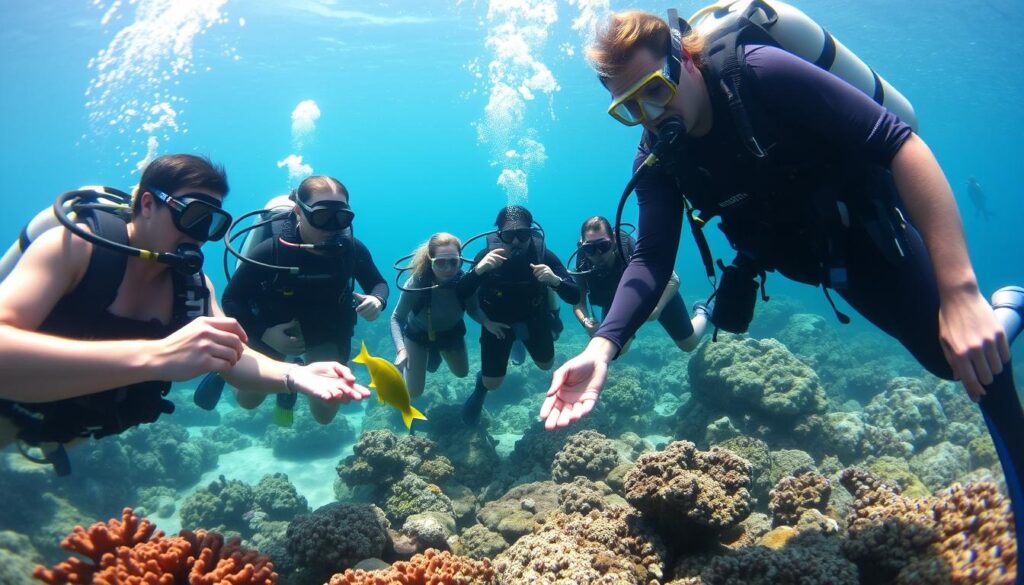
Protecting Marine Ecosystems
Understanding marine ecosystems enables participants to recognize hazards and appreciate delicate balances. Knowledgeable divers better comprehend species relationships and environmental vulnerabilities.
Buoyancy control becomes crucial for avoiding accidental contact with coral formations. Proper finning techniques prevent sediment disturbance that can harm delicate organisms.
Human contact damages protective mucous layers on fish and coral, potentially causing disease. Environmental briefings educate about local protected species and conservation concerns.
Eco-Friendly Dive Practices
The “take only pictures, leave only bubbles” philosophy guides responsible underwater behavior. This approach ensures marine life, shells, and artifacts remain undisturbed in their natural habitat.
Many enthusiasts participate in cleanup activities, removing threatening debris from ocean floors. These practices transform recreational activities into meaningful conservation efforts.
Protecting underwater environments ensures future generations can experience the same incredible world. Responsible practices maintain the economic foundation of the entire diving industry.
Conclusion
The journey from novice to certified marine adventurer follows a proven educational path that emphasizes safety and skill mastery. Every part of this structured approach serves a specific purpose in building competent, confident individuals ready for aquatic exploration.
Quality instruction provides the essential knowledge and practical abilities needed to dive safely in various environments. This comprehensive preparation reflects the unique challenges of the underwater world where proper training directly determines enjoyment and security.
Certification represents just the beginning of a lifelong diving adventure. With continuing education and accumulated experience, skills develop over the years. The investment in proper training pays dividends across decades of extraordinary underwater encounters shared with others.