
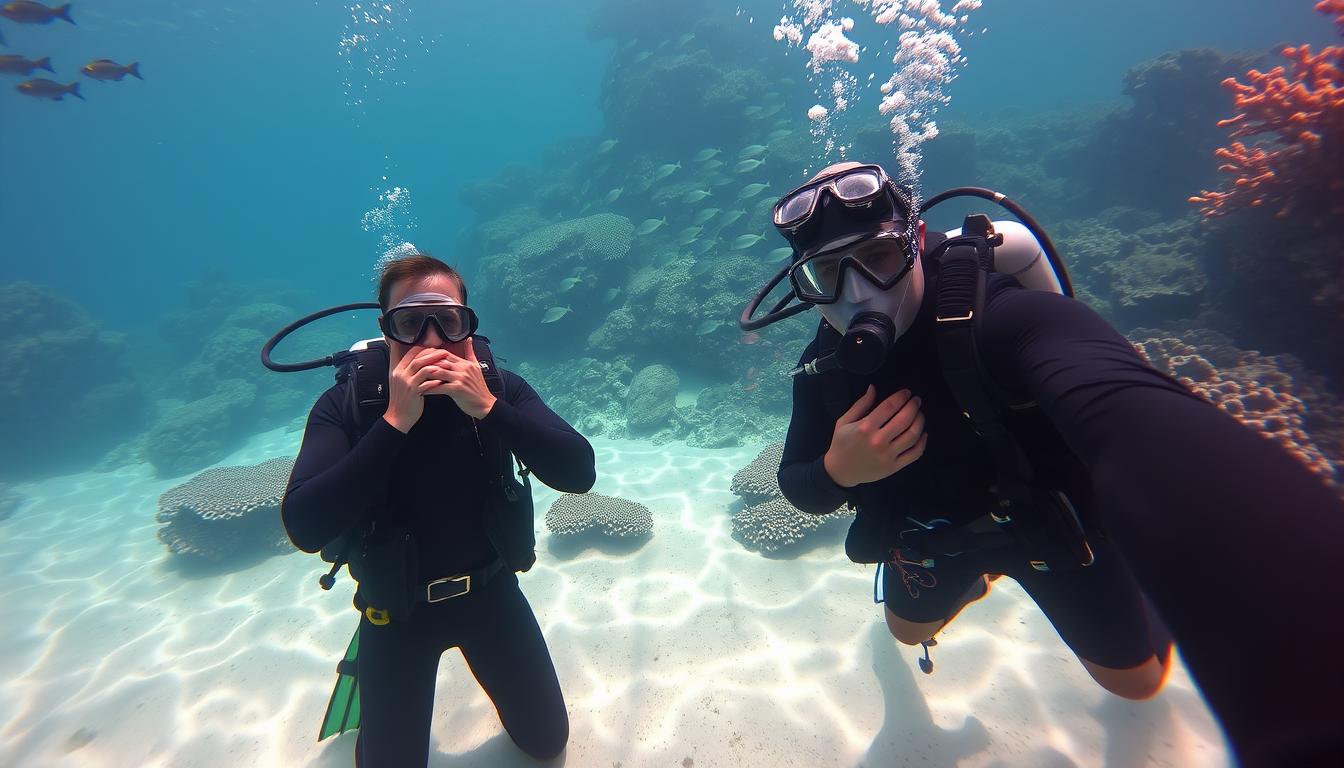
Exploring the underwater realm offers one of the most extraordinary adventure experiences available today. The opportunity to witness marine life up close creates memories that last a lifetime. This activity combines physical challenge with breathtaking natural beauty.
As certified enthusiasts gain freedom to explore with only their buddy by their side, they naturally encounter learning curves. The transition from controlled training environments to independent exploration brings new challenges. Most issues that arise are easily preventable once people understand what to watch for.
Making errors doesn’t indicate failure but represents normal parts of skill development. Recognizing potential problems early can prevent minor concerns from escalating. Awareness and proper technique remain essential for safe underwater adventures.
The world beneath the waves rewards those who respect safety protocols and continuously work to improve. This guide helps both new and experienced participants identify habitual patterns that could diminish enjoyment.
Key Takeaways
- Scuba diving offers incredible adventure but requires proper technique and awareness
- Transitioning from training to independent exploration presents natural learning challenges
- Most underwater issues are preventable with proper knowledge and preparation
- Making errors is part of the normal learning process for divers
- Early recognition of potential problems prevents minor issues from becoming serious
- Safety protocols and continuous skill improvement ensure better underwater experiences
- Both new and experienced enthusiasts can benefit from reviewing habitual patterns
Essential Dive Preparation and Pre-Dive Checks
A systematic approach to pre-dive procedures ensures equipment reliability and personal security beneath the surface. Many enthusiasts overlook these critical steps due to excitement or routine familiarity.
Proper rituals before each aquatic adventure prevent potential issues from becoming emergencies. The BWRAF system provides a structured way to verify essential functions.
Thorough Gear and Equipment Assessment
Every piece of dive equipment requires individual attention before entering the water. Beginners often miss subtle problems that experienced participants catch immediately.
Common oversights include partially open tank valves and twisted regulator hoses. Testing your buoyancy control device on the surface confirms proper inflation and deflation.
| Proper Gear Check | Common Oversights | Potential Consequences |
|---|---|---|
| Full tank valve opening | Half-open valves | Reduced air supply |
| Secure mask strap alignment | Twisted or loose straps | Water leakage |
| BCD inflation test | Skipped functionality check | Buoyancy issues |
| Weight system verification | Incorrect weight placement | Difficulty maintaining depth |
Importance of Buddy Checks and Communication
Your dive partner provides a second set of eyes to catch overlooked details. This collaborative verification mirrors aviation safety protocols.
Establishing clear communication before descent ensures both participants understand emergency procedures. Testing unfamiliar gear together builds confidence in equipment performance.
This partnership approach transforms individual preparation into shared responsibility. The buddy system remains one of diving’s most effective safety measures.
Managing Air Consumption and Breathing Techniques
Your breathing pattern directly determines how long you can stay beneath the surface. Many participants become so captivated by marine life that they forget to check their pressure gauge. This distraction can lead to unexpectedly rapid air consumption, especially at greater depths.
Controlling Breathing to Conserve Air
Fast, shallow breaths waste your valuable supply. Calm, controlled breathing patterns significantly reduce your consumption rate. This approach also helps prevent anxiety that can accelerate your breathing.
Efficient movement complements proper breathing technique. Unnecessary effort increases your body’s oxygen demand. Smooth, rhythmic patterns help extend your bottom time.
Using Dive Computers and SPGs Effectively
Regular monitoring prevents surprises. Check your submersible pressure gauge every 5-10 minutes during the dive. Plan to surface with at least 500 psi remaining for safety.
These tools provide real-time data that helps divers make informed decisions. Developing consistent checking habits ensures you’ll always know your air status. This awareness becomes second nature with practice.
- Monitor your gauge at regular intervals
- Maintain a safety reserve of 500 psi
- Practice slow, deep breathing patterns
- Move efficiently to conserve energy
Achieving Optimal Buoyancy Control and Weight Adjustments
Achieving neutral buoyancy transforms the underwater experience from strenuous to effortless. This skill allows you to hover motionless, conserving energy and air. Proper control prevents unnecessary contact with delicate marine environments.
Many beginners carry excessive weight. This causes their feet to sink, forcing constant kicking and BCD adjustments. The result is wasted energy and rapid air consumption.
Your buoyancy needs change with different conditions. Wetsuit thickness, water salinity, and tank type all affect your weighting requirements. What worked on one dive may not work on the next.
Fine-Tuning Weight and BCD Settings
Perform a weight check whenever you change equipment. Practice buoyancy skills in shallow water before deeper dives. Use your breath for minor adjustments instead of constantly inflating your BCD.
Maintain a horizontal position rather than swimming vertically. BCDs function best when you’re level in the water. Vertical positioning creates drag and wastes energy.
Improve your trim by practicing on dry land first. Adjust weight placement by moving lead from your waist to trim pockets. These buoyancy control tips help build muscle memory for better underwater balance.
Mastering these foundational skills requires patience and practice. Start in calm, shallow conditions before progressing to challenging environments. Proper buoyancy and trim significantly enhance your entire diving experience.
Navigating Depth, Pressure, and Equalization Methods
Understanding pressure changes is fundamental to safe underwater exploration. As you change depth, water pressure increases significantly, affecting your body and equipment.
Proper management of these changes prevents serious medical conditions. Two critical areas require attention during every dive.
Safe Ascents, Descents, and Equalization Techniques
Controlling your movement through the water column is essential. Rapid ascents increase decompression sickness risk. Slow, controlled movements protect your safety.
Equalize early and often during descent. Begin at the surface and continue every few feet. If equalization fails, ascend slightly before trying again.
| Proper Technique | Common Error | Risk Factor |
|---|---|---|
| Equalize every 2-3 feet | Wait for discomfort | Ear barotrauma |
| Ascend at 30 ft/min | Rapid ascent | Decompression sickness |
| Safety stop 3-5 minutes | Skip safety stop | Increased DCS risk |
| Continuous breathing | Breath-holding | Lung over-expansion |
Preventing Pressure-Related Injuries
Monitor your dive computer throughout the entire experience. Never rely solely on guides for depth and time management.
Safety stops are minimum requirements, not targets. Adding extra minutes provides additional decompression safety margin. Always breathe continuously to avoid lung injuries.
Proper planning and execution make each underwater adventure safer. Respect the relationship between depth and pressure for enjoyable experiences.
Recognizing Common Scuba Diving Mistakes
Learning from others’ experiences provides valuable insights that prevent repeating dangerous underwater behaviors. Many enthusiasts develop patterns that compromise safety without realizing the consequences.
One frequent error involves exceeding certification limits. Being certified doesn’t mean readiness for every environment. Deep dives, strong currents, and overhead environments require specific training.
Learning from Real Dive Experiences
The Dunning-Krueger effect explains why some participants overestimate their abilities. They think “I’ll just go a little deeper” without understanding how variables change rapidly. This habit creates steep increases in danger.
Routinely pushing beyond comfort levels because nothing bad happened yet is risky. Eventually, untrained enthusiasts get caught without proper preparation. This can lead to injuries and voided insurance coverage.
| Safe Approach | Risky Behavior | Potential Outcome |
|---|---|---|
| Respect certification limits | Exceed depth restrictions | Decompression sickness risk |
| Choose appropriate sites | Venture into overhead environments | Entrapment or disorientation |
| Communicate with instructor | Hide confusion or concerns | Knowledge gaps and stress |
| Take specialty courses | Rely on basic training alone | Unprepared for challenges |
Open communication during training prevents knowledge gaps. Some beginners feel shy about needing help, but this leads to confusion later. Conservative decision-making shows wisdom, not weakness.
Following established safety guidelines ensures enjoyable underwater adventures. Recognizing these patterns helps avoid dangerous situations before they occur.
Maintaining Focus: Communication, Task Management, and Equipment Handling
The ability to maintain concentration while handling equipment and communicating is crucial for safe exploration. Many participants experience task overload when trying to manage cameras and accessories before mastering fundamental skills.
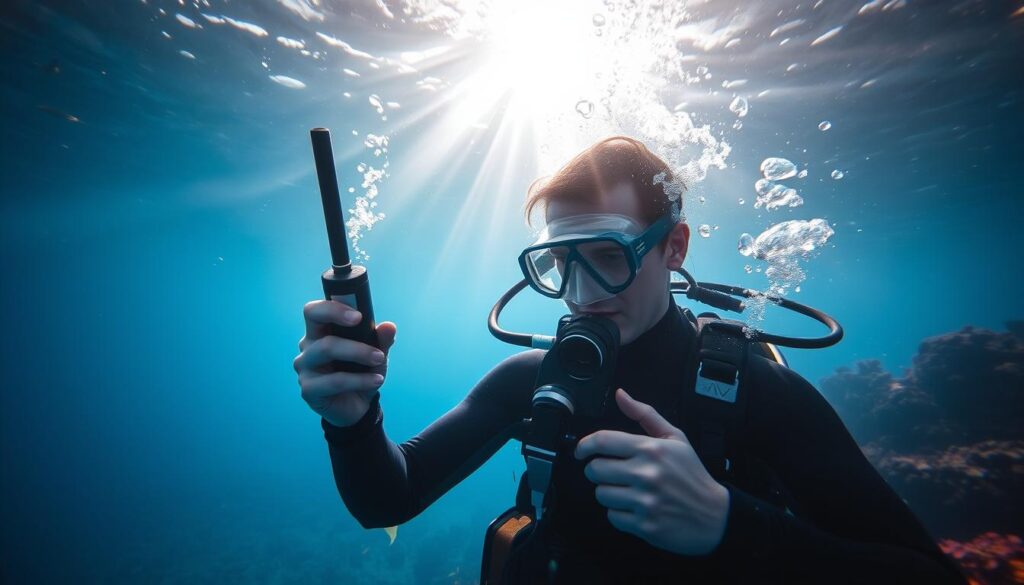
This overload compromises buoyancy control and situational awareness. Beginners should keep their setup simple during initial dives.
Streamlining Equipment Use and Finning Techniques
Avoid “living through the viewfinder” where you only experience a tiny portion of the underwater world. Wait to add cameras until you can hover comfortably without constant attention.
Poor finning technique wastes energy and air. Beginners often over-kick or swim vertically. Efficient participants use slow, deliberate strokes while maintaining horizontal positioning.
| Proper Equipment Handling | Improper Practices | Better Alternative |
|---|---|---|
| Secure tanks on deck floor | Standing cylinders upright | Prevents falls and damage |
| Keep mask on at surface | Immediate removal | Protects from waves |
| Horizontal body position | Vertical swimming | Reduces drag and effort |
| Simple gear for beginners | Multiple accessories early | Builds foundation first |
Effective Duo Dive Communication and Planning
Review the dive plan thoroughly before entering the water. Agree on signals, spacing, and emergency procedures with your partner. Stay close enough to communicate easily throughout the experience.
Ask your guide or instructor questions during the briefing. Clear communication prevents confusion and separation. This approach ensures everyone in the group understands their responsibilities.
Conclusion
Every dive presents an opportunity to refine your skills and deepen your connection with the marine environment. The underwater world offers incredible experiences for those who approach this adventure with patience and respect.
Improvement comes through consistent practice and following fundamental training principles. Checking your air, communicating with your buddy, and staying aware of your surroundings make each experience safer. Most issues can be avoided by applying what you learned in certification courses.
Taking extra time for preparation is never wasted effort. This commitment to safety enhances enjoyment throughout your diving life. The journey of skill development rewards those who prioritize proper procedures over convenience.